Categories
current affairs

Is the apparent failure at Copenhagen really so bad?

Following news of the Copenhagen summit has been a roller coaster filled with false alarms, misinformation, consternation and uncertainty. Like many people, I was hoping for a binding agreement to dramatically reduce emissions, keep temperature rises below 2 degrees and support for developing nations. But now I’m not sure that was ever truly a realistic outcome.

Yes, it sounds like arrangements for this massive summit could have been better. Perhaps more could have been done in the preparatory meetings. But how likely was it that we were going to get nearly 200 countries of enormous diversity, development and political direction to agree on strong binding action to cut greenhouse gas emissions? It’s certainly unfair to compare COP15 with the Montreal Protocol process which successfully dealt with ozone hole causing gases such as CFCs.

The production and use of CFCs were nowhere as central to mainstream ‘developed’ lifestyles as greenhouse gases now are. And the key narrative behind the need for global binding action is that reducing emissions will hurt economies. As a result nobody wants to make the first move for risk of crippling their economic competitiveness.

I think this view needs challenging. If a recession is the time for public spending (and it is) then ambitious projects for improved rail, renewable energy sources, energy efficiency upgrades and more are what we need. They keep people in jobs, improve quality of life whilst addressing our need to reduce emissions.

What they also do is put nations in a much better place to cope with ever increasing fuel costs as well as supply uncertainty. Because if the threat of violent climate change isn’t enough to galvanise action, certainly fuel shortages and spiraling prices will be — these are proven political hot buttons for rapid action. Oil is running out, it’s just a matter of when.

So while a decent agreement at Copenhagen would have been welcome, on reflection I don’t think it was ever that likely. We’re instead going to have to rely on self-interest to get the job done. Countries are going to run out of things to burn soon and the last ones ready with renewable energy sources are going to be the ones to experience the most cost and pain. Politicians take note — voters don’t like not being able to heat their homes, cook their dinner or travel around their countries.

UPDATE: Let’s not forget that despite the Kyoto protocol being ‘legally binding’ most countries are way off meeting their Kyoto obligations.

Categories
current affairs

Last night’s Council Meeting on the Core Strategy

Last night saw an epic Full Council meeting in Brighton Town Hall… With about 90 amendments planned to go forward either from various individual parties or collectively from all the opposition parties together. Why so many? Because we were debating the ‘Core Strategy’ which is the document which defines our aims and visions for the city’s built environment over the next 10-15 years. It’s an important document which sets the shape development in the City should take.

All that being said, it’s only a part of the overall planning process, which includes local plans, masterplans for areas, supplementary planning documents and briefs plus the usual application process to the committee. So something being in this Core Strategy doesn’t guarantee that it will happen, but it certainly sets a direction of travel. (An appropriate turn of phrase given that the most contentious section by far was on transport!)

You’ll be relieved to know that I won’t be going through all the amendments here. I’m just going to highlight a few of particular interest to me, I expect others may well also blog their amendments of interest.

It has to be said that the Tories were not best pleased by the prospect of being outvoted by the opposition parties working together. So they kicked off the meeting with some pretty poorly chosen words attacking our joint working as somehow being undemocratic. If we could collectively agree issues and made up more of the council chamber than them, then surely that was exactly how representative democracy is supposed to work!

As was said many times in the long (very long) evening, if the Tories had taken the time and effort to involve the other parties much earlier in the process, many of the amendments might have been avoided — they could have been incorporated through consensus prior to the meeting. As a minority administration I’m astonished they thought they would be able to push through such a critical document without engaging with the other parties.

As the meeting wore on, it dawned on the Tories that they were going to have to get on with the job of collaborative working. Suddenly a 10 minute adjournment was called, which stretched to 90 minutes as the four party leaders went through the amendments and the Tories accepted a good number of them… except some of the critical ones about transport, of course, which they truly seem to be in denial about. Have they not seen the daily traffic jams and dire air quality reports?

Anyway I digress from my pet amendments which were all Green only amendments. They all related to plans for the Brighton Square and Churchill Square Area. In essence the plan is for Standard Life (owner of Churchill Square) to financially support the new Brighton Centre in return for being able to expand their shopping centre. My key amendment asked to delete the plans to add 20,000 square metres of retail space to Churchill Square. I don’t believe such space is needed, especially given the large number of vacant commercial properties across Regency Ward: In Churchill Square, Western Road, North Street, Ship Street etc. We don’t need more large chain stores and the retail study this plan is based on used wildly optimistic growth projections in population and disposable income which are already well out of kilter with reality and official predictions. Furthermore the Core Strategy on this part of the city absolutely fails to even mention residents — people actually live around there!

I was disappointed, but not surprised, to have that amendment ruled unsound by the planners. This meant it couldn’t be voted on because it would render the final document unsound in the eyes of a Government Planning Inspector and so would risk a central government plan being imposed on us instead of our own.

However two ‘sound’ Green amendments to help mitigate the growth of the Churchill carbuncle did get passed. These require additional car movements to be kept to the ‘minimum necessary’ and required ‘high quality public and sustainable transport facilities [to] serve new development’. Furthermore they add that ‘Car trips linked to large scale retail provision will be the minimum necessary.’

I had insisted on our amending language using ‘minimum’ instead of ‘minimise’ which is much softer and easier to talk around in my view. I hadn’t expected cross-party support for those amendments but we got it and they’re now in the Core Strategy. A win for Regency Ward I think.

Thanks to all the amendments we overall have a much better Core Strategy than it would otherwise have been. The process could have been less painful and chaotic on the night if the Tories had thought about their minority position more carefully instead of trying to brazen it out. It will take a Green council administration before we can really get the document where we want it to be though…

PS The Argus’ Andy Chiles has covered this whole affair in recent days here and here plus a centre spread in today’s paper.

Categories
current affairs

Post Licensing Committee thoughts

The other disappointment of the week was Licensing Committee, which stretched through Thursday afternoon and evening.

The agenda was packed (part 1 and part 2), I won’t rehearse all here, don’t worry!

Cab Conundrum

Certainly the most high profile item was the Hackney Carriage Unmet Demand Survey. Essentially this was about the taxis you can hail on the street (Private Hire are those you have to call to book), whether the city needs more and whether disabled users are being well served. I’d received detailed emails from various associations and the GMB union about this item. It’s evident from the report that at the moment disabled customers are not being well served by taxis, and there’s general agreement amongst drivers and taxi firms that something more has to be done. A wheelchair user has to wait on average 45 minutes for a taxi (11 minutes is the average non-wheelchair user wait) and can’t pre-book with some firms or get any taxi at all during certain periods of the day.

Whilst an independent survey found that despite a 40% increase in passenger journeys, there was little unmet demand requiring additional licenses, it seemed obvious to me that allowing a continuation of the 5 new licenses a year we currently have been offering would be useful because we could continue to require the licenses to be for wheelchair cabs. This would represent only a 1% increase on the overall Hackney Carriage licenses, so not threatening business for other drivers, but would be a significant boost in wheelchair capacity each year. Sadly, except for the Greens and the LibDem member, the other parties voted this down opting for only 2 new licenses a year.

But much worse, they absolutely refused to accept amendments put forward by my Green colleague Cllr Pete West. These amendments just asked for an officer report to look into how and if we should set a percentage quota of wheelchair accessible vehicles on the books of the larger Hackney Carriage firms and also whether a condition requiring wheelchair accessible vehicles should be added to all new private hire licenses.

The Council’s consultants had estimated we need roughly 400 more wheelchair accessible cabs to eliminate the difference in waiting time. It’s going to take 200 years to get there at the rate Labour and Tories have set and they’ve refused to explore the options for which we can see widespread support for in the trade. A clear missed opportunity to eliminate a systematic inequality in a vital transport system for those with disabilities. I’m so disappointed the other party members wouldn’t support even an officer report on the path forward.

Alcohol Disorder Zones

The Committee had received a request from the St James Street Local Action Team, supported by the Kingscliffe Society, to instigate an Alcohol Disorder Zone (ADZ) in their locality. This is a new legal tool which no council has yet used, but which would result in an action plan to bring together the Council and Police in tackling alcohol related disorder. In extreme cases it could force all licensed premises in the zone to pay for services to tackle the problems.

Sadly the Police and Council licensing officers didn’t seem very keen on the idea, the legislation may have some imperfections (what doesn’t) and were wary of the negative publicity in declaring a neighbourhood a ‘disorder zone’. However support from the city’s Director of Public Health was noticeable.

Again my colleague Cllr Pete West offered an amendment. The officer recommendation was for a Council policy where only the Chief of Police would be able to request such a zone from the Council, but Cllr West’s amendment expanded that to allow Local Action Teams and constituted community groups to make such requests… which seemed to be much more inclusive. Surely local groups would be those best able to judge if they needed to get help for alcohol disorder? Some areas feel dissatisfaction with the Police, so handing the power only to the Police Chief could well exacerbate that. Sadly, once again Labour and Tories wouldn’t support this.

I put forward an amendment that we accept the St James Street LAT’s request and begin the ADZ process for their area. They had formally requested it and no policy of Police Chief only had been agreed at the time of their submission, but I’m afraid again there was no support.

While I accept that ADZs aren’t perfect, clearly the Cumulative Impact Area in the city centre isn’t enough to counter-balance the over-liberal 2003 Licensing Act which is causing chaos for my constituents.

Health Impact Assessment of Licensing

This was a very powerful report showing the devastating impact alcohol is having on our city. The graphs showing a huge growth in alcohol-related hospital admissions since the new licensing law came into force are shocking, especially given that they don’t include A&E figures!

This report was good backing for why Dr Tom Scanlon, Director of Public Health for the city, is so keen for more action. The report is vital reading and will hopefully feed into a new city-wide licensing policy next year. Another of my Green colleagues on the committee, Cllr Georgia Wrighton, proposed some amendments which we did finally manage to get agreed. These included referring the report to the Environment & Community Safety Overview & Scrutiny Committee (dreadfully long name, I know), to the Full Council and also having the Chair of the Licensing Committee write to the relevant ministers, attaching the report and asking for ‘Impact on Public Health’ to be included as a licensing objective under the Licensing Act. This would then allow residents, the NHS and council to object to licensing applications on the basis of impact on health; which currently isn’t possible.

Finally some success!

The rest

There were other reports on street trading, gambling and alcohol harm to children but little dramatic emerged from them in the committee meeting itself so I shall leave the curious to find the minutes whenever they are published.

Some very disappointing outcomes. Reflecting on why there wasn’t support from Tories and Labour, I wonder if it’s because they don’t represent the inner city wards which suffer the direct impacts of the new Licensing Act… perhaps but that doesn’t excuse their failure to support disabled people’s needs on the taxi report. I’d like to hear an explanation for that one.

UPDATE: I forgot to mention one bit of good news that emerged at the Committee… Taxi marshalls for city centre ranks will be returning from this Friday night until March next year thanks to some Home Office funding. I believe they’ll be on for the peak nights and peak ranks only, but I know they really help to free up Police resources so are very welcome.

Categories
current affairs

The Primark Planning decision

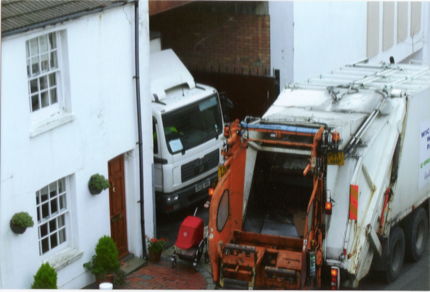
Primark delivery jam in Crown Street
Primark delivery jam in Crown Street, with a buggy squeezing by.

The past few days have brought some bitter disappointments in the Council’s committee rooms.

On Thursday I attended the Planning Committee to support residents objecting to Primark’s application which would give them the right to virtually unlimited deliveries between 8am and 8pm. The current level of disturbance is too much for them, any growth would be wholly unacceptable. I have documented more on the problems previously.

I have been working on this application for nearly 2 years — it was submitted in March 2008 as, incredibly, the seventh application by Primark for this building. Over this period it was made very clear to me by council officers that some of Primark’s bad behaviour (e.g. vehicles coming in via Marlborough St) was un-enforceable until this new application went to the committee. This was because the existing conditions were unclear following a number of applications and a partial success (for Primark) at an appeal.

So I had been chasing and chasing the application, getting residents to write in to the planning officers and so on, in the hope we could soon get enforcement action. Sadly this all fell apart at the committee meeting. Firstly the officer presenting the application to the committee was not well briefed, for example claiming Primark deliver through Western Road when in fact they don’t. Officers appeared to be surprised to hear that Primark were servicing via Marlborough Street when they shouldn’t have been (enforcement officers have been told this for years); they were also surprised to be told that Primark’s yard had never been used for deliveries by previous tenants Littlewood and C&A. And so on…

Fortunately the photos I circulated to all members raised questions about how well the current setup was working for traffic flows. Additionally the pictures of clearly unusable cycle parking drew comments of enforcement action being needed from another officer. But after nearly TWO YEARS of being told this by residents and councillors why were officers showing surprise on the day? I can tell you, the galleries gasped and tutted.

To add to the dismay officers also told us that the report (can I mention again, nearly two years in gestation) had incorrect conditions and so amended them verbally to allow Sunday and Public holiday deliveries – admittedly via Western Road only – but still not something the published conditions would have allowed at all. Furthermore officers emphasised that this application was only about Primark’s failure to discharge conditions about (inaccessible) cycle parking, putting up security gates without prior agreement and sustainability issues.

Chris Naylor-Smith spoke very well on behalf of the residents. A spokeswoman from Primark’s agents offered a canned speech which didn’t reflect reality, then as Committee member Cllr Amy Kennedy has commented, was unable to answer any questions whatsoever. I then spoke but was probably showed how furious I was about the way the application was unfolding, completely contrary to how residents and I had been told it would by officers.

To their credit, committee members generally showed concern about the failings of the current delivery arrangements, the problems it caused Crown St and Marlborough St residents and Primark’s clear failure to act responsibly to its neighbours… let alone engage with them.

Green Cllr Amy Kennedy offered some excellent conditions, requiring all deliveries via Western Road and rubberising the yard and cages to reduce noise. Labour Cllr Juliet McCaffery offered to second the rubberising conditions. However officers made it very clear that these were not acceptable as they did not relate to the matters of cycle parking, security gates and sustainability conditions. This advice put an end to the kinds of conditions residents had been hoping for.

Sadly, other than the Green committee members who chose to vote down the application and one Tory abstention the remainder of the Committee (Conservatives and Labour) all followed officer advice and voted through the application. It’s not entirely clear to me if a condition requiring the cycle parking to be accessible and a formal notification to Primark requesting that they engage with their neighbours will be included in the formal decision notice. We shall see.

It was an extremely disappointing event, not just because I couldn’t get the result residents were hoping for, but because the terms of the whole application shifted so dramatically from what we had been previously led to believe. This isn’t over though, I’ll be following this up with the Council and Primark as will residents, I’m sure.

My letter to the Planning Comittee

Photo dossier

Webcast of the Committee meeting (From memory, Primark came about 2.5 hours into the meeting)

UPDATED: Having reviewed the webcast I realised I had wrongly attributed the abstention to Labour, in fact it was Cllr Mrs Theobald, Conservative.

Categories
current affairs

Brighton Primark Protest

This morning I had an early start to get out to Crown Street in Regency ward. I was joining residents who live around the large Brighton Primark on Western Road. For nearly two years their life has been blighted by deliveries through their small residential cul-de-sacs. Whilst most other businesses on Western Road take deliveries through loading bays at the front of their stores, Primark insist on using these side roads causing noise, vibrations and congestion.

Primark’s management have refused to enter into dialogue with residents or councillors. We’d had enough so decided to blockade their 8am Saturday morning product delivery. We hope to raise the profile of these issues ahead of a planning application from Primark being decided by the council’s planning committee this Wednesday 25th November, which includes delivery issues. We’re asking for a condition forcing Primark to take deliveries from the front like everyone else. Please lobby your councillors using WriteToThem.

See how our protest went:

A short report from BBC South East:

Update:
Some pictures of the protest by local resident Jane Dallaway are now on Flickr.

Categories
notes from JK

The Future of British Politics

In this essay I argue that for lasting democratic renewal, this country urgently needs constitutional reform, empowered local politics and better quality politicians.

It is striking how many commentators argue that the “time for reform is now”, that there seems to be a “groundswell of support” or a “new consensus” forming. Sadly, as of late 2009, there doesn’t seem to be the reform at any level that these authors sense is imminent. Are reformists as a group fooling themselves? Or by making their proposals seem inevitable do they hope to garner more support?

In fact I think that they are correct. A great number of people, quite possibly a majority, feel deeply dissatisfied with how the UK is run. How its basic processes operate and the poor tangible results they deliver.

The NHS is fragmenting into Foundation Trusts regardless of local opinion. Schools are nailed to the national curriculum and obsessive testing. The Police are chasing the same drug users over and over again while lax licensing leaves communities dazed by alcoholic chaos.

It does seem like time for reform to me. But politics… our politicians… are just not responding effectively to the challenges, if at all. They make lots of noise about policies and initiatives. But they are designed for the media – so they, the politicians, are seen to be doing something.

There are honorable exceptions but I am afraid that the vast majority of politicians are dreadful. They fail to critically assess the issues or resulting legislation. They toe craven party lines, which again are crafted for the media first and foremost. They don’t seem to mind dodging questions or parroting massaged statistics on national television. These are not normal people. I wouldn’t make figures up when talking to my boss or friends. I doubt many of us would. If asked a question I would try to answer it honestly, not answer a different question altogether.

The media are a problem too… they make sport of politicians often putting them in impossible situations. Sometimes, like exposing the expenses debacle, they are effective in holding the politicians to account. But too often they are happy to recite lines fed to them by political operatives resulting in crescendos of scaremongering, disinformation and out-of-context ‘revelations’.

Perhaps this country has got the politicians it deserves. But I hope not… I think that it is more correct to say that politicians have somehow morphed into a separate class with their own priorities, values and way of operating. They have become disconnected from the greater population in a very unhelpful way. Try as they might, they can’t help but put their own interests ahead of others.

People bemoan professional politicians. I don’t entirely agree. I would love politicians to be professional in how their conducted politics. Wasn’t Churchill the consummate professional? I see politics as a process of negotiation between competing visions, needs and interests. It is difficult work, filled with tricky compromises and careful balancing acts. Too often it is portrayed as simple ideologies battling it out — but in reality there is never a simple ‘red overcomes blue’ victory. If our politicians were more explicit about this reality, more careful and much more honest I believe that would greatly help.

Why aren’t they? Because the culture of our politics is excessively tribal, focussed on defending the party and often far too petty. It seems extraordinary that so much time and energy could be spent on banning fox hunting yet despite many promises and reviews we still don’t have an elected upper house or a more proportional voting system for Westminster. We also have an absurd number of ministers soaking up MPs who should be busy as legislators, not managers. We are burdened with an unwritten constitution, notoriously unbalanced libel laws, an unhealthy obsession with maintaining our position in the world order (hence vast spending on the military) and a massively centralised government.

We also have a famously aggressive media pack which has forced government into launching incessant new initiatives often developed in the space of nothing more than a few days.

It is clear to me in my travels that countries with strong regional and local government tend to fare better. There is a stronger sense of ‘place’, there is more accountability and profile for local politicians and hence national government is not so burdened with details. Nowhere is perfect but we in the UK have spent too long being pleased with our past achievements. They are long gone. This is not a new trend…

In 1872 we were one of the last democracies to adopt the secret paper ballot, way after our colonies had done so. Having been an early adopter of democracy itself we then rested on our laurels, while others saw the opportunity for positive reform and took it. Still to this day our vote is not truly secret due to the serial number of every ballot. In every other serious democracy such a system is regarded as an abomination. Have we lost the knack of reform?

I think not. We have still managed to introduce some devolution, the Human Rights Act and the creation of a Supreme Court. These were all good things, though there are details we could argue need improving.

However I don’t believe any of these were seen as inherently threatening to the political class. Devolution, if anything, created more space for the political classes and initially at least, did not create any major political upsets either.

An elected upper house and proportional representation, for example, would smash open the current club quite dramatically. Without a House of Lords how would failed MPs stay in the gang or Prime Ministers stuff their cabinets? And proportional representation would abolish the notion of safe seats, utterly changing the logic of current British general election campaigning (and so media reporting). Changing the rules for political party finances would risk more new parties gaining ground. A written constitution would eliminate the wriggle room that allowed decisions like the second war on Iraq to squeeze through. These changes would create a political system and associated culture that would be significantly more accessible and accountable.

Let’s run through a quick list of reforms I think necessary:

  • A written constitution;
  • An elected upper house;
  • Proportional Representation for all elections;
  • Reformed party finance with capped donations and expenditure;
  • Reduced number of Ministers;
  • Possibly rooted in the new constitution, a major re-balancing of power and responsibilities between national government, agencies and local government.

This list resists all the policy changes I would love to implement from rewriting our tax system to nationalising the railways! These would be for our re-invigorated political system to debate. I don’t believe that the reforms I suggest would swing the political leanings of Westminster one way or the other. I don’t think that should be a factor in one’s deliberations on constitutional reform and in the end it doesn’t matter. As long as the reformed system is significantly more representative of people’s wishes then I am hopeful that outcomes will be improved.

I know some will probably call this hard to swallow because I am a “Green”. As an elected politician for the Green Party I am branded, stamped, tarred with the party political imprint. This is a symptom of the problem with British politics at the moment. Once someone “comes out” as being party political they are viewed with suspicion, their utterances are treated with caution and they are no longer “independent”. Our political culture needs renewal so we can get past such simplistic views.

Too much political discourse revolves around one party being bad and the other good. I personally consider party labels as flags of convenience for describing certain worldviews. It doesn’t mean everything from one or the other should be utterly discredited. When we cannot find common ground, let us heartily disagree. But to be so tribal makes agreement when there is common ground that much more difficult.

So what shape should politics and politicians take?

I hope for constitutional reform, I see that as the most likely catalyst for lasting change to our political culture. But as we may be waiting a long time we can still be mindful of Ghandi’s exhortation that we be the change we want to see in the world.

I believe a modern politician should first and foremost be true to themselves. By honestly reflecting their views and acting in accordance with them they are far less likely to hoodwink voters, toe party lines on difficult votes or mislead in interviews.

They need to be honest, hardworking and open to opposing views. They should be excellent communicators both in public and one to one.

In their defence, today’s politicians all suffer from incessant interruptions, excessive meetings and vast requests on their time whether emails, phone calls or invitations to events. Somehow politicians need to find the self confidence and strength to sail a path through this to calmer waters where they can reflect, consider and do much more quality legislative work.

Whilst accepting the electoral realities of re-election bids, being seen at hundreds of events and in thousands of press clippings should not be the main focus of our politicians. Nobody can think clearly when running all the time. We need to help them slow down if we want better quality thinking from them.

I do think being a politician is a full time job. It is if you want to do it properly. Legislating against second jobs seems overly restrictive though, let the voters decide on that. But while we expect our MPs, even the most backbench ones from small parties, to work full time… we seem to have a much lower opinion of our councillors.

Despite managing millions if not billions of assets (Brighton & Hove City Council’s assets are worth about £2 billion) councillors are expected to work only part time on their duties. Furthermore based on the time they are expected to work (which excludes residents meetings etc) the value is discounted by around a third because being a Councillor is a ‘public service’. So councillors end up with a small allowance — which is taxed like a salary — for managing the area they represent. Councillors in Oxford City get around £3k a year, Brighton & Hove around £11k and Birmingham £16k; and some say Birmingham is the largest local authority of its type in Europe.

54 councillors in Brighton & Hove are responsible for managing, monitoring, scrutinising the budget, policies and actions of a council which provides waste collection, social care, schooling, cultural services, roads, street lights… the list goes on. Yes the council leader, cabinet members and some others get additional allowances but the leader in Brighton & Hove gets £38k in total while the Chief Executive is on some £170k. Who is in charge there?

I’m not advocating £170k salaries… CEO pay needs reducing. But we’re trying to get our local government on the cheap – and it shows from the poor results we get. What if there were fewer councillors, about one per ward, earning around £30k each and the leader on something like £60k. Would that be outrageous? It would cost about the same as the current councillor pay bill. But we would then have councillors able to dedicate their whole time to supporting their local area and properly considering policies.

At the moment that isn’t possible because nobody has the time, so officers take the lead and councillors just mutter and nod at their reports.

If we were to rebalance the power between local and national government then reforming the role of councillors would become inevitable. It is only because local authorities are the poor relatives of government that the current situation has been allowed to persist. If, like in Sweden, local councils had lead responsibility for health or policing as they used to, then I doubt such weak democratic structures with part time representatives would be allowed to persist.

It is our current politicians who are responsible for our constitutional arrangements, the centralisation of government and the dire political culture. So, remembering the honorable exceptions I noted previously, I am led this conclusion about the future of British politics:

For a better politics we need better politicians. It’s a simple as that.

Categories
current affairs

Back from my Halloween Horror

On the Saturday of Halloween I had an unexpected tour of the Royal Sussex County’s Accident & Emergency department. Not that there is an ideal time, but Halloween night is not a good time to be in A&E, it was busy! My Halloween horror was a nasty concussion and back injury after a garage door came down on my head at speed. It hurt. Through my blurry vision I could see zombie face-painted people in the hospital waiting room, most surreal.

Two weeks of doctor enforced rest and I’m now getting back up to speed. I’m not 100% better, but good enough to get back into the blogosphere. I’ll be relying on my osteopath to get me over the last of the symptoms.

So I’m sorry to disappoint readers like Dan Wilson that I wasn’t able to cover the CityClean strikes, but I was laid up. The strikes are suspended and we’re still awaiting full resolution of the detailed issues at hand. I know Green colleagues were working hard on supporting the unions, but I’m not up to speed on the details.

Meanwhile the selection for the new Tory candidate for Brighton Pavilion continues, with Brighton Politics Blogger stirring up an unprecedented number of Tory comments to his/her blog. Good luck to the candidates, selections are a nerve wracking process. I must flag one issue I have with this process which is still being promoted as an ‘open primary’ when in fact it is an ‘open caucus’. The difference? With a primary anyone in the constituency can register to vote resulting in a larger turnout and so greater representation. A caucus is a meeting where those attending the meeting can vote after presentations from the candidates – it’s a much smaller scale affair and so less inclusive. Regardless, I think open primaries are gimmick which don’t solve fundamental issues with politics.

Attacking other parties for not having selected their candidates in that way is pretty weak in my view. How about having a go at policy differences?!

One of the Tory hopefuls, Scott Digby, has a pop at Greens with the rather tired ‘watermelon’ joke which local Tories having been chortling about for rather too long. But Digby rather misses the point, the joke is that we’re supposed to be ‘Communists’ as Tory cabinet member Cllr Ayas Fallon-Khan likes to allege, not Labour! We couldn’t be more different than Labour, disagreeing on: ID cards, privatisation, education, taxation, wars in Iraq & Afghanistan… I could go on!

Categories
notes from JK

Open Primaries: Right diagnosis, wrong solution

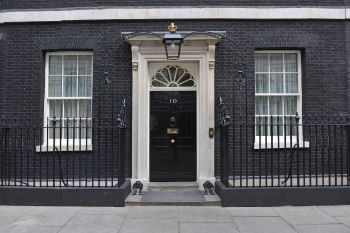
10 Downing Street

I was very interested to see the launch of the ‘Open Up’ campaign, with a very slick website and duck-house videos. I would expect nothing less given the people behind it including the immensely capable Becky Hogge, ORG’s former Executive Director.

There is as a whole swathe of campaigning going on at the moment calling for reform in one sense or another. This is extremely encouraging and welcome, it’s wonderful that people are speaking out and getting involved. More power to them.

However, I must take issue with Open Up’s proposed solution. I absolutely agree with their core argument that we need better and more diverse politicians. I think the poor quality of British politics and politicians is an absolutely critical issue at the moment.

In my view party political representative democracy is still the least worst option available to us. If we didn’t have parties we’d have to invent them. All lasting democracies develop groupings of some form another. But we urgently need to re-invigorate parties and our democratic institutions.

Interestingly the Speaker’s Conference in Parliament has recently been touching on these issues too. I took the opportunity to watch online the three party leaders speaking to the Conference: Cameron sounds more dynamic next to Brown but didn’t really say anything more significant. I felt Clegg was the most honest in admitting many of the people they need weren’t coming forward. He also argued that Westminster itself wasn’t the right kind of place to attract the people we need in politics.

We need better politicians

So if we accept that to improve our politics we need better politicians; then it follows that we need a more diverse set of candidates from a wider set of backgrounds. How are open primaries going to do that?

The argument is that because anyone can stand to be a candidate in an open primary, the barriers to ‘real people’ becoming candidates are lowered. People who aren’t party animals, more likely to be ‘mavericks’, will be more likely to stand. This is possibly the case but standing for an open primary then an actual general election doesn’t strike me as a low barrier, many will be put off by that. Furthermore there is no discussion of how to prevent the rich getting a head-start in winning an open primary.

This is one of several practical problems I see with open primaries. Another is that most parties cannot possibly afford to run open primaries where every elector in a constituency can vote for their candidate. The three largest parties are all in debt and the addition of this kind of process in every constituency would be beyond them let alone the smaller parties.

It would also be expensive for potential candidates, particularly if the primaries were truly ‘open’ allowing leafleting and canvassing across the constituency. Such primaries would further extend the length of time a potential candidate would need to dedicate to winning a Westminster seat. If a General Election goes to the wire (as this one looks to) then it can already be a two or three year unpaid commitment before we throw in a whole open primary process.

Finally there is a real risk of voter burnout once the novelty of open primaries has worn out. In a seat like Brighton Pavilion you could be looking at four or five primaries minimum then the General Election itself. There is evidence, particularly from the United States where some citizens vote on dozens posts and initiatives annually, that the more things people are asked to vote on, the less likely they are to vote. There can be too much of a good thing.

These are serious practical problems with open primaries which proponents don’t properly address, I’m not sure they can. There are also political problems with open primaries which mean they won’t deliver what proponents hope for.

Political problems

I believe open primaries will greatly increase the chance of politically naive candidates being selected. I don’t just mean innocent about the ways of politics (though that could be an issue that impacts on their effectiveness as MPs), but that candidates could genuinely not understand or know the range of a party’s policies before being selected.

Imagine a popular local figure gets selected for a party in an open primary then wins the General Election to become an MP by campaigning on, for example, health and policing. This MP is asked by their party whips to vote on a variety of issues in ways they don’t support such as education or civil partnerships. What do they do? Most parties use peer pressure and whips to enforce party discipline and ensure that policies are pushed through (if they are in government). If you vote for a candidate from a certain party shouldn’t you expect them to generally be in line with that party’s core values and policies? How will open primaries, when people of all and no party affiliation have a hand in selecting a party’s candidate ensure some compatibility with a party’s values?

We don’t want to see only the most loyal, grovelling party animals selected as candidates. Absolutely not. But we also don’t want people to become disenchanted because they voted for a certain party only to find the candidate isn’t really in line with what the party represents. Rebels have an important place in Parliament at critical times, but systematic rebellion (pre-planned or unintentional through naivety) is a recipe for chaos, not reasoned legislative work.

Open primaries also don’t alter the electoral reality of safe seats. Unless extremely ineffective or corrupt, most sitting MPs will have an inherent advantage in any selection whether it’s an open primary or internal party process. That’s just how it is, they have the profile and the contacts. Open primaries don’t neutralise incumbency, and we see in the US that it’s still reported as unusual for a sitting politician to lose their party’s selection through a primary if seeking re-election.

We need reform and a new political culture

We need a new culture of politics, one that is more open, honest and transparent. I admire the energy and passion of the Open Up campaign, but disagree with their prescribed solution. Open primaries will be prohibitively expensive for parties and candidates, will burn out voters, could result in candidates not truly representing the party label they stand for whilst failing to address the problem of safe seats.

Changing the culture in our politics requires a more open media, a redesigned educational system, a new constitution, reform of political funding, a recall process and most importantly — a system of proportional representation to elect members to both houses of Parliament. Call for open primaries distracts from these key requirements in the reform agenda.

I believe party politics has a great future ahead of it, if we can increase the number and quality of parties. We need smaller parties that can be more representative of specific groups in our society, more flexible, responsive and less hamstrung by the internal coalitions and simmering disagreement that the large parties of today represent.

This would force greater collaboration, more discourse as opposed to bombastic posturing and a richer, better politics for our country. What do you think?

Categories
notes from JK

Climate Change: It’s happening…

Share photos on twitter with Twitpic

Today is Blog Action Day 2009 and the theme is Climate Change. An easy one for me to support!

If you’re still in doubt then take a look at Google Earth’s climate change page (with intro narrated by the one and only Al Gore). Zac Goldsmith made an excellent point on Newsnight last night… that people are desperate for political leadership on this issue. I agree, but don’t think Cameron is the man to do it! Greenpeace made a similar point with their marvellous “Change the Politics, Save the Climate” action on Parliament.

Ways to take action:

Categories
current affairs

Wrong-headed Tory CEO-Mayor policy

I was astounded and appalled by Monday’s announcement from the Conservatives that they planned to merge council chief executives with directly elected Mayors.
The Guardian:
Twelve cities across the country would hold referendums to get rid of their council chief executives and hand over the powers to an “executive mayor”, who would take over the role of hiring and firing staff, determining council operations, and directing spending, as well as offering political leadership.
Conflating the two posts would help address public concern about the pay of local authority bosses, said Caroline Spelman, the shadow communities secretary.
Firstly, I agree that many chief executives (in local authorities and private companies) are vastly overpaid compared to their hard working staff. But cutting up to 12 CEO salaries and replacing them with new elections for mayors is hardly going to be saving money. It’s a populist measure because most people won’t think of the cost of the elections when hearing the proposal — they’ll just keep in mind losing another expensive bureaucrat.
But what worries much more is that this announcement shows that the Conservatives are ready to abuse the position of the civil service as much as Labour have. Peter Oborne and others have been scathing of how a trend to politicise and misuse the civil service in the political trenches has gone from occasional in the Thatcher years to out of control in the Blair years.
No matter who is in charge politically, a paid head of the civil service is needed to manage the permanent staff of government who remain whatever changes elections bring. YES local government desperately needs serious reform… but going back on hundreds of years of political evolution by merging officer and politician is wrong-headed, fixes nothing and is just cheap populism.
This is a bad policy and I’m disappointed that a major political party could actually announce something so wrongheaded. It doesn’t bode well for the level of political debate ahead…

I was astounded and appalled by Monday’s announcement from the Conservatives that they planned to merge council chief executives with directly elected Mayors.

The Guardian:

Twelve cities across the country would hold referendums to get rid of their council chief executives and hand over the powers to an “executive mayor”, who would take over the role of hiring and firing staff, determining council operations, and directing spending, as well as offering political leadership.

Conflating the two posts would help address public concern about the pay of local authority bosses, said Caroline Spelman, the shadow communities secretary.

(Also see reports in LGCPlus and Planning Resource)

Firstly, I agree that many chief executives (in local authorities and private companies) are vastly overpaid compared to their hard working staff. But cutting up to 12 CEO salaries and replacing them with new elections for mayors is hardly going to be saving money. It’s a populist measure because most people won’t think of the cost of the elections when hearing the proposal — they’ll just keep in mind losing another expensive bureaucrat.

But what worries much more is that this announcement shows that the Conservatives are ready to abuse the position of the civil service as much as Labour have. Peter Oborne and others have been scathing of how a trend to politicise and misuse the civil service in the political trenches has gone from occasional in the Thatcher years to out of control in the Blair years.

No matter who is in charge politically, a paid head of the civil service is needed to manage the permanent staff of government who remain whatever changes elections bring. YES local government desperately needs serious reform… but going back on hundreds of years of political evolution by merging officer and politician is wrong-headed, fixes nothing and is just cheap populism.

This is a bad policy and I’m disappointed that a major political party could actually announce something so wrongheaded. It doesn’t bode well for the level of political debate ahead…