Categories
current affairs

Post Licensing Committee thoughts

The other disappointment of the week was Licensing Committee, which stretched through Thursday afternoon and evening.

The agenda was packed (part 1 and part 2), I won’t rehearse all here, don’t worry!

Cab Conundrum

Certainly the most high profile item was the Hackney Carriage Unmet Demand Survey. Essentially this was about the taxis you can hail on the street (Private Hire are those you have to call to book), whether the city needs more and whether disabled users are being well served. I’d received detailed emails from various associations and the GMB union about this item. It’s evident from the report that at the moment disabled customers are not being well served by taxis, and there’s general agreement amongst drivers and taxi firms that something more has to be done. A wheelchair user has to wait on average 45 minutes for a taxi (11 minutes is the average non-wheelchair user wait) and can’t pre-book with some firms or get any taxi at all during certain periods of the day.

Whilst an independent survey found that despite a 40% increase in passenger journeys, there was little unmet demand requiring additional licenses, it seemed obvious to me that allowing a continuation of the 5 new licenses a year we currently have been offering would be useful because we could continue to require the licenses to be for wheelchair cabs. This would represent only a 1% increase on the overall Hackney Carriage licenses, so not threatening business for other drivers, but would be a significant boost in wheelchair capacity each year. Sadly, except for the Greens and the LibDem member, the other parties voted this down opting for only 2 new licenses a year.

But much worse, they absolutely refused to accept amendments put forward by my Green colleague Cllr Pete West. These amendments just asked for an officer report to look into how and if we should set a percentage quota of wheelchair accessible vehicles on the books of the larger Hackney Carriage firms and also whether a condition requiring wheelchair accessible vehicles should be added to all new private hire licenses.

The Council’s consultants had estimated we need roughly 400 more wheelchair accessible cabs to eliminate the difference in waiting time. It’s going to take 200 years to get there at the rate Labour and Tories have set and they’ve refused to explore the options for which we can see widespread support for in the trade. A clear missed opportunity to eliminate a systematic inequality in a vital transport system for those with disabilities. I’m so disappointed the other party members wouldn’t support even an officer report on the path forward.

Alcohol Disorder Zones

The Committee had received a request from the St James Street Local Action Team, supported by the Kingscliffe Society, to instigate an Alcohol Disorder Zone (ADZ) in their locality. This is a new legal tool which no council has yet used, but which would result in an action plan to bring together the Council and Police in tackling alcohol related disorder. In extreme cases it could force all licensed premises in the zone to pay for services to tackle the problems.

Sadly the Police and Council licensing officers didn’t seem very keen on the idea, the legislation may have some imperfections (what doesn’t) and were wary of the negative publicity in declaring a neighbourhood a ‘disorder zone’. However support from the city’s Director of Public Health was noticeable.

Again my colleague Cllr Pete West offered an amendment. The officer recommendation was for a Council policy where only the Chief of Police would be able to request such a zone from the Council, but Cllr West’s amendment expanded that to allow Local Action Teams and constituted community groups to make such requests… which seemed to be much more inclusive. Surely local groups would be those best able to judge if they needed to get help for alcohol disorder? Some areas feel dissatisfaction with the Police, so handing the power only to the Police Chief could well exacerbate that. Sadly, once again Labour and Tories wouldn’t support this.

I put forward an amendment that we accept the St James Street LAT’s request and begin the ADZ process for their area. They had formally requested it and no policy of Police Chief only had been agreed at the time of their submission, but I’m afraid again there was no support.

While I accept that ADZs aren’t perfect, clearly the Cumulative Impact Area in the city centre isn’t enough to counter-balance the over-liberal 2003 Licensing Act which is causing chaos for my constituents.

Health Impact Assessment of Licensing

This was a very powerful report showing the devastating impact alcohol is having on our city. The graphs showing a huge growth in alcohol-related hospital admissions since the new licensing law came into force are shocking, especially given that they don’t include A&E figures!

This report was good backing for why Dr Tom Scanlon, Director of Public Health for the city, is so keen for more action. The report is vital reading and will hopefully feed into a new city-wide licensing policy next year. Another of my Green colleagues on the committee, Cllr Georgia Wrighton, proposed some amendments which we did finally manage to get agreed. These included referring the report to the Environment & Community Safety Overview & Scrutiny Committee (dreadfully long name, I know), to the Full Council and also having the Chair of the Licensing Committee write to the relevant ministers, attaching the report and asking for ‘Impact on Public Health’ to be included as a licensing objective under the Licensing Act. This would then allow residents, the NHS and council to object to licensing applications on the basis of impact on health; which currently isn’t possible.

Finally some success!

The rest

There were other reports on street trading, gambling and alcohol harm to children but little dramatic emerged from them in the committee meeting itself so I shall leave the curious to find the minutes whenever they are published.

Some very disappointing outcomes. Reflecting on why there wasn’t support from Tories and Labour, I wonder if it’s because they don’t represent the inner city wards which suffer the direct impacts of the new Licensing Act… perhaps but that doesn’t excuse their failure to support disabled people’s needs on the taxi report. I’d like to hear an explanation for that one.

UPDATE: I forgot to mention one bit of good news that emerged at the Committee… Taxi marshalls for city centre ranks will be returning from this Friday night until March next year thanks to some Home Office funding. I believe they’ll be on for the peak nights and peak ranks only, but I know they really help to free up Police resources so are very welcome.

Categories
current affairs

The Primark Planning decision

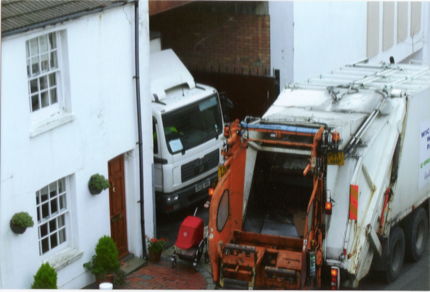
Primark delivery jam in Crown Street
Primark delivery jam in Crown Street, with a buggy squeezing by.

The past few days have brought some bitter disappointments in the Council’s committee rooms.

On Thursday I attended the Planning Committee to support residents objecting to Primark’s application which would give them the right to virtually unlimited deliveries between 8am and 8pm. The current level of disturbance is too much for them, any growth would be wholly unacceptable. I have documented more on the problems previously.

I have been working on this application for nearly 2 years — it was submitted in March 2008 as, incredibly, the seventh application by Primark for this building. Over this period it was made very clear to me by council officers that some of Primark’s bad behaviour (e.g. vehicles coming in via Marlborough St) was un-enforceable until this new application went to the committee. This was because the existing conditions were unclear following a number of applications and a partial success (for Primark) at an appeal.

So I had been chasing and chasing the application, getting residents to write in to the planning officers and so on, in the hope we could soon get enforcement action. Sadly this all fell apart at the committee meeting. Firstly the officer presenting the application to the committee was not well briefed, for example claiming Primark deliver through Western Road when in fact they don’t. Officers appeared to be surprised to hear that Primark were servicing via Marlborough Street when they shouldn’t have been (enforcement officers have been told this for years); they were also surprised to be told that Primark’s yard had never been used for deliveries by previous tenants Littlewood and C&A. And so on…

Fortunately the photos I circulated to all members raised questions about how well the current setup was working for traffic flows. Additionally the pictures of clearly unusable cycle parking drew comments of enforcement action being needed from another officer. But after nearly TWO YEARS of being told this by residents and councillors why were officers showing surprise on the day? I can tell you, the galleries gasped and tutted.

To add to the dismay officers also told us that the report (can I mention again, nearly two years in gestation) had incorrect conditions and so amended them verbally to allow Sunday and Public holiday deliveries – admittedly via Western Road only – but still not something the published conditions would have allowed at all. Furthermore officers emphasised that this application was only about Primark’s failure to discharge conditions about (inaccessible) cycle parking, putting up security gates without prior agreement and sustainability issues.

Chris Naylor-Smith spoke very well on behalf of the residents. A spokeswoman from Primark’s agents offered a canned speech which didn’t reflect reality, then as Committee member Cllr Amy Kennedy has commented, was unable to answer any questions whatsoever. I then spoke but was probably showed how furious I was about the way the application was unfolding, completely contrary to how residents and I had been told it would by officers.

To their credit, committee members generally showed concern about the failings of the current delivery arrangements, the problems it caused Crown St and Marlborough St residents and Primark’s clear failure to act responsibly to its neighbours… let alone engage with them.

Green Cllr Amy Kennedy offered some excellent conditions, requiring all deliveries via Western Road and rubberising the yard and cages to reduce noise. Labour Cllr Juliet McCaffery offered to second the rubberising conditions. However officers made it very clear that these were not acceptable as they did not relate to the matters of cycle parking, security gates and sustainability conditions. This advice put an end to the kinds of conditions residents had been hoping for.

Sadly, other than the Green committee members who chose to vote down the application and one Tory abstention the remainder of the Committee (Conservatives and Labour) all followed officer advice and voted through the application. It’s not entirely clear to me if a condition requiring the cycle parking to be accessible and a formal notification to Primark requesting that they engage with their neighbours will be included in the formal decision notice. We shall see.

It was an extremely disappointing event, not just because I couldn’t get the result residents were hoping for, but because the terms of the whole application shifted so dramatically from what we had been previously led to believe. This isn’t over though, I’ll be following this up with the Council and Primark as will residents, I’m sure.

My letter to the Planning Comittee

Photo dossier

Webcast of the Committee meeting (From memory, Primark came about 2.5 hours into the meeting)

UPDATED: Having reviewed the webcast I realised I had wrongly attributed the abstention to Labour, in fact it was Cllr Mrs Theobald, Conservative.

Categories
current affairs

Brighton Primark Protest

This morning I had an early start to get out to Crown Street in Regency ward. I was joining residents who live around the large Brighton Primark on Western Road. For nearly two years their life has been blighted by deliveries through their small residential cul-de-sacs. Whilst most other businesses on Western Road take deliveries through loading bays at the front of their stores, Primark insist on using these side roads causing noise, vibrations and congestion.

Primark’s management have refused to enter into dialogue with residents or councillors. We’d had enough so decided to blockade their 8am Saturday morning product delivery. We hope to raise the profile of these issues ahead of a planning application from Primark being decided by the council’s planning committee this Wednesday 25th November, which includes delivery issues. We’re asking for a condition forcing Primark to take deliveries from the front like everyone else. Please lobby your councillors using WriteToThem.

See how our protest went:

A short report from BBC South East:

Update:
Some pictures of the protest by local resident Jane Dallaway are now on Flickr.

Categories
notes from JK

The Future of British Politics

In this essay I argue that for lasting democratic renewal, this country urgently needs constitutional reform, empowered local politics and better quality politicians.

It is striking how many commentators argue that the “time for reform is now”, that there seems to be a “groundswell of support” or a “new consensus” forming. Sadly, as of late 2009, there doesn’t seem to be the reform at any level that these authors sense is imminent. Are reformists as a group fooling themselves? Or by making their proposals seem inevitable do they hope to garner more support?

In fact I think that they are correct. A great number of people, quite possibly a majority, feel deeply dissatisfied with how the UK is run. How its basic processes operate and the poor tangible results they deliver.

The NHS is fragmenting into Foundation Trusts regardless of local opinion. Schools are nailed to the national curriculum and obsessive testing. The Police are chasing the same drug users over and over again while lax licensing leaves communities dazed by alcoholic chaos.

It does seem like time for reform to me. But politics… our politicians… are just not responding effectively to the challenges, if at all. They make lots of noise about policies and initiatives. But they are designed for the media – so they, the politicians, are seen to be doing something.

There are honorable exceptions but I am afraid that the vast majority of politicians are dreadful. They fail to critically assess the issues or resulting legislation. They toe craven party lines, which again are crafted for the media first and foremost. They don’t seem to mind dodging questions or parroting massaged statistics on national television. These are not normal people. I wouldn’t make figures up when talking to my boss or friends. I doubt many of us would. If asked a question I would try to answer it honestly, not answer a different question altogether.

The media are a problem too… they make sport of politicians often putting them in impossible situations. Sometimes, like exposing the expenses debacle, they are effective in holding the politicians to account. But too often they are happy to recite lines fed to them by political operatives resulting in crescendos of scaremongering, disinformation and out-of-context ‘revelations’.

Perhaps this country has got the politicians it deserves. But I hope not… I think that it is more correct to say that politicians have somehow morphed into a separate class with their own priorities, values and way of operating. They have become disconnected from the greater population in a very unhelpful way. Try as they might, they can’t help but put their own interests ahead of others.

People bemoan professional politicians. I don’t entirely agree. I would love politicians to be professional in how their conducted politics. Wasn’t Churchill the consummate professional? I see politics as a process of negotiation between competing visions, needs and interests. It is difficult work, filled with tricky compromises and careful balancing acts. Too often it is portrayed as simple ideologies battling it out — but in reality there is never a simple ‘red overcomes blue’ victory. If our politicians were more explicit about this reality, more careful and much more honest I believe that would greatly help.

Why aren’t they? Because the culture of our politics is excessively tribal, focussed on defending the party and often far too petty. It seems extraordinary that so much time and energy could be spent on banning fox hunting yet despite many promises and reviews we still don’t have an elected upper house or a more proportional voting system for Westminster. We also have an absurd number of ministers soaking up MPs who should be busy as legislators, not managers. We are burdened with an unwritten constitution, notoriously unbalanced libel laws, an unhealthy obsession with maintaining our position in the world order (hence vast spending on the military) and a massively centralised government.

We also have a famously aggressive media pack which has forced government into launching incessant new initiatives often developed in the space of nothing more than a few days.

It is clear to me in my travels that countries with strong regional and local government tend to fare better. There is a stronger sense of ‘place’, there is more accountability and profile for local politicians and hence national government is not so burdened with details. Nowhere is perfect but we in the UK have spent too long being pleased with our past achievements. They are long gone. This is not a new trend…

In 1872 we were one of the last democracies to adopt the secret paper ballot, way after our colonies had done so. Having been an early adopter of democracy itself we then rested on our laurels, while others saw the opportunity for positive reform and took it. Still to this day our vote is not truly secret due to the serial number of every ballot. In every other serious democracy such a system is regarded as an abomination. Have we lost the knack of reform?

I think not. We have still managed to introduce some devolution, the Human Rights Act and the creation of a Supreme Court. These were all good things, though there are details we could argue need improving.

However I don’t believe any of these were seen as inherently threatening to the political class. Devolution, if anything, created more space for the political classes and initially at least, did not create any major political upsets either.

An elected upper house and proportional representation, for example, would smash open the current club quite dramatically. Without a House of Lords how would failed MPs stay in the gang or Prime Ministers stuff their cabinets? And proportional representation would abolish the notion of safe seats, utterly changing the logic of current British general election campaigning (and so media reporting). Changing the rules for political party finances would risk more new parties gaining ground. A written constitution would eliminate the wriggle room that allowed decisions like the second war on Iraq to squeeze through. These changes would create a political system and associated culture that would be significantly more accessible and accountable.

Let’s run through a quick list of reforms I think necessary:

  • A written constitution;
  • An elected upper house;
  • Proportional Representation for all elections;
  • Reformed party finance with capped donations and expenditure;
  • Reduced number of Ministers;
  • Possibly rooted in the new constitution, a major re-balancing of power and responsibilities between national government, agencies and local government.

This list resists all the policy changes I would love to implement from rewriting our tax system to nationalising the railways! These would be for our re-invigorated political system to debate. I don’t believe that the reforms I suggest would swing the political leanings of Westminster one way or the other. I don’t think that should be a factor in one’s deliberations on constitutional reform and in the end it doesn’t matter. As long as the reformed system is significantly more representative of people’s wishes then I am hopeful that outcomes will be improved.

I know some will probably call this hard to swallow because I am a “Green”. As an elected politician for the Green Party I am branded, stamped, tarred with the party political imprint. This is a symptom of the problem with British politics at the moment. Once someone “comes out” as being party political they are viewed with suspicion, their utterances are treated with caution and they are no longer “independent”. Our political culture needs renewal so we can get past such simplistic views.

Too much political discourse revolves around one party being bad and the other good. I personally consider party labels as flags of convenience for describing certain worldviews. It doesn’t mean everything from one or the other should be utterly discredited. When we cannot find common ground, let us heartily disagree. But to be so tribal makes agreement when there is common ground that much more difficult.

So what shape should politics and politicians take?

I hope for constitutional reform, I see that as the most likely catalyst for lasting change to our political culture. But as we may be waiting a long time we can still be mindful of Ghandi’s exhortation that we be the change we want to see in the world.

I believe a modern politician should first and foremost be true to themselves. By honestly reflecting their views and acting in accordance with them they are far less likely to hoodwink voters, toe party lines on difficult votes or mislead in interviews.

They need to be honest, hardworking and open to opposing views. They should be excellent communicators both in public and one to one.

In their defence, today’s politicians all suffer from incessant interruptions, excessive meetings and vast requests on their time whether emails, phone calls or invitations to events. Somehow politicians need to find the self confidence and strength to sail a path through this to calmer waters where they can reflect, consider and do much more quality legislative work.

Whilst accepting the electoral realities of re-election bids, being seen at hundreds of events and in thousands of press clippings should not be the main focus of our politicians. Nobody can think clearly when running all the time. We need to help them slow down if we want better quality thinking from them.

I do think being a politician is a full time job. It is if you want to do it properly. Legislating against second jobs seems overly restrictive though, let the voters decide on that. But while we expect our MPs, even the most backbench ones from small parties, to work full time… we seem to have a much lower opinion of our councillors.

Despite managing millions if not billions of assets (Brighton & Hove City Council’s assets are worth about £2 billion) councillors are expected to work only part time on their duties. Furthermore based on the time they are expected to work (which excludes residents meetings etc) the value is discounted by around a third because being a Councillor is a ‘public service’. So councillors end up with a small allowance — which is taxed like a salary — for managing the area they represent. Councillors in Oxford City get around £3k a year, Brighton & Hove around £11k and Birmingham £16k; and some say Birmingham is the largest local authority of its type in Europe.

54 councillors in Brighton & Hove are responsible for managing, monitoring, scrutinising the budget, policies and actions of a council which provides waste collection, social care, schooling, cultural services, roads, street lights… the list goes on. Yes the council leader, cabinet members and some others get additional allowances but the leader in Brighton & Hove gets £38k in total while the Chief Executive is on some £170k. Who is in charge there?

I’m not advocating £170k salaries… CEO pay needs reducing. But we’re trying to get our local government on the cheap – and it shows from the poor results we get. What if there were fewer councillors, about one per ward, earning around £30k each and the leader on something like £60k. Would that be outrageous? It would cost about the same as the current councillor pay bill. But we would then have councillors able to dedicate their whole time to supporting their local area and properly considering policies.

At the moment that isn’t possible because nobody has the time, so officers take the lead and councillors just mutter and nod at their reports.

If we were to rebalance the power between local and national government then reforming the role of councillors would become inevitable. It is only because local authorities are the poor relatives of government that the current situation has been allowed to persist. If, like in Sweden, local councils had lead responsibility for health or policing as they used to, then I doubt such weak democratic structures with part time representatives would be allowed to persist.

It is our current politicians who are responsible for our constitutional arrangements, the centralisation of government and the dire political culture. So, remembering the honorable exceptions I noted previously, I am led this conclusion about the future of British politics:

For a better politics we need better politicians. It’s a simple as that.
Categories
current affairs

Brighton O-K or O-no?

A mockup of the Brighton O as provided by their PR agency

One of the joys and challenges of representing Regency ward is the number of major projects proposed for the area from redevelopment of the Brighton Centre to building on the site of the old Royal Alex Children’s Hospital and what do with the site of the West Pier.

The latest proposal is a temporary observation wheel known as the “Brighton O” which unusually is a spokeless design. If built the wheel would apparently move to another city once construction of the i360 tower was to commence (another classic Regency ward project saga).

I’m getting very mixed views from residents and businesses on the Brighton O. Many think the wheel would be superb for rejuvenating a part of the seafront which is in need of attention and greater footfall. Others believe it will be excessively disruptive to an already crowded area affecting the sailing club, businesses and residents of buildings it will overshadow.

The case for the O is at www.brightono.com and the case against is at www.brightonno.org.uk

I’d very much like to hear more views on this. Do you think the project will make a positive contribution to the city with an unusual design or is it an invitation for people to look in resident’s bedroom windows? Let me know.

If you’d like to register your views with the planning committee, send your views to Chris.A.Wright@brighton-hove.gov.uk

Categories
voting

Where next for e-counting in London?

On 18th November I hope to find out the future of e-counting in London. Conservative London Assembly Member, Andrew Boff, will be asking London’s Mayor, Boris Johnson the following question:

Elections
Question No: 3574 / 2009
Andrew Boff

For the 2012 elections would the Mayor prefer a £5million+ electronic count where the bulk of the costs would go to a foreign computer company or a £3.5million manual count where the bulk of the costs would go into Londoner’s pockets? (Source [PDF])

This question sums up the view the Open Rights Group and I have been advocating. Does it really make sense to splurge a huge sum of money on e-counting when we know a manual count would be cheaper, let alone easier to verify and more trusted by voters and politicians alike? In these times of restricted public funds wouldn’t the millions for e-counting be better spent on other priorities – I certainly think so.

The back story is that after strong urging from the Electoral Commission and the Open Rights Group, London agreed to conduct a cost-benefit analysis of continuing with e-counting versus using manual counting. When it finally emerged the analysis was obviously biased towards e-counting, trying to minimise the greater cost of e-counting as much as possible.

When a round table was organised to discuss stakeholder views of the analysis, attendees were told that London would proceed with e-counting regardless, rather making the process and that meeting pointless. The Guardian picked up the story. At this point ORG released its own comments on London’s analysis (which I led on drafting) but the Electoral Commission had yet to release theirs.

When the Commission did release their views (something which I was very remiss not to blog on then, sorry loyal readers) we were in for a pleasant surprise. The response was very direct in criticising the weakness of London’s analysis and failings in the UK Government in providing a clearer framework for the use (or not) of such voting technologies. The killer quote:

“However, having studied the cost-benefit assessment, we are concerned that there are potentially a number of gaps that suggest the advantages of e- counting may have been overstated. For example, it was assumed that e- counting was free from human error. Conversely, the assumptions made about the speed and accuracy of manual counting seem overly negative. Also, important safe-guards, such as preparing a manual count as a back-up and the manual checking of a random sample of ballot papers do not appear to have been considered when costing e-counting.

“Therefore, we would suggest that a determination that e-counting is affordable and that the cost is not significantly or disproportionately more than that of manual counting cannot be made without undertaking further analysis of the costs and benefits which takes into account these and other points…”

The Commission also notes the moral hazard in there being only 2 likely suppliers for running an e-counted London election. It also adds a final significant warning:

“We believe that there are considerable risks in undertaking a large scale e-counting exercise in the absence of such a national framework and that the current cost-benefit analysis by GLRO does not sufficiently fill the gap created by this absence.”

It was the strongest public statement I have ever seen from the Commission, and I couldn’t have been more delighted by the firm approach they took. GLA officers are understood to be re-doing some form of analysis following the Commission’s request for more work, meanwhile however procurement also seems to be going ahead. More coverage by Mark Park.

The hope is that Andrew Boff’s question will reveal the current direction and show how committed Boris Johnson is to spending taxpayer funds on election technology.

Categories
current affairs

Back from my Halloween Horror

On the Saturday of Halloween I had an unexpected tour of the Royal Sussex County’s Accident & Emergency department. Not that there is an ideal time, but Halloween night is not a good time to be in A&E, it was busy! My Halloween horror was a nasty concussion and back injury after a garage door came down on my head at speed. It hurt. Through my blurry vision I could see zombie face-painted people in the hospital waiting room, most surreal.

Two weeks of doctor enforced rest and I’m now getting back up to speed. I’m not 100% better, but good enough to get back into the blogosphere. I’ll be relying on my osteopath to get me over the last of the symptoms.

So I’m sorry to disappoint readers like Dan Wilson that I wasn’t able to cover the CityClean strikes, but I was laid up. The strikes are suspended and we’re still awaiting full resolution of the detailed issues at hand. I know Green colleagues were working hard on supporting the unions, but I’m not up to speed on the details.

Meanwhile the selection for the new Tory candidate for Brighton Pavilion continues, with Brighton Politics Blogger stirring up an unprecedented number of Tory comments to his/her blog. Good luck to the candidates, selections are a nerve wracking process. I must flag one issue I have with this process which is still being promoted as an ‘open primary’ when in fact it is an ‘open caucus’. The difference? With a primary anyone in the constituency can register to vote resulting in a larger turnout and so greater representation. A caucus is a meeting where those attending the meeting can vote after presentations from the candidates – it’s a much smaller scale affair and so less inclusive. Regardless, I think open primaries are gimmick which don’t solve fundamental issues with politics.

Attacking other parties for not having selected their candidates in that way is pretty weak in my view. How about having a go at policy differences?!

One of the Tory hopefuls, Scott Digby, has a pop at Greens with the rather tired ‘watermelon’ joke which local Tories having been chortling about for rather too long. But Digby rather misses the point, the joke is that we’re supposed to be ‘Communists’ as Tory cabinet member Cllr Ayas Fallon-Khan likes to allege, not Labour! We couldn’t be more different than Labour, disagreeing on: ID cards, privatisation, education, taxation, wars in Iraq & Afghanistan… I could go on!

Categories
current affairs

Less alcohol than ever at Sainsbury’s, Western Road? I don’t think so

Half-price wine offer as you walk into Sainsbury's Western Road
Half-price wine offer as you walk into Sainsbury's Western Road - is this responsible?

A while ago I spoke on behalf of residents to a licensing panel considering an application from Sainsbury’s. The supermarket, a very short way from Waitrose, wanted to double its size and so needed to apply for a new license to sell alchohol.

Residents and I were concerned given that the area already has an abundance of places from which alcohol can be bought. Residents suffer from noise, anti-social behaviour, violence and more. It has got significantly worse since the new 2003 Licensing Act came into force.

However despite residents’ objections and my strenuous arguments that the license should be strictly curtailed if approved at all, it was granted. The Sainsbury’s lies right on the border of the ‘Cumulative Impact Area’ for licensing but that made no difference. Sainsbury’s barrister successfully prevented me from debating the low prices at which the supermarket sells alcohol. He also claimed that overall the new twice as big shop would have less space devoted to alcohol sales than previously.

Sadly the shop was boarded up and under expansion then so I couldn’t do ‘before and after’ shots. But I went in recently to take a look and there seemed to me to be a very significant space devoted to alcohol – see all the pictures on Flickr. The first shelf to greet you on entering the store was promoting half price bottles of wine.

In August this year, while I was on holiday, Sainsbury’s put in to extend the hours of alcohol sales to almost 24 hours. Unfortunately nobody objected to this other than the Council’s Trading Standards*. This is not surprising because beyond a small piece of paper in the window, there is NO requirement to notify people living near premises applying for a license or wishing to vary an existing one. Trading Standards’ concern related to underage drinking, but once a “Challenge 21” scheme was agreed to by Sainsbury’s (a fairly standard condition) the objection was withdrawn and the licensing panel meeting was cancelled.

However the online licensing register still shows the extended license as not having been granted because checks are outstanding. I’m trying to find out what that means but it seems likely that very soon we are going to have a virtually 24hr off-license selling at supermarket prices. The licensing law is completely failing residents and this city – we seem unable to stop the spread of cheap booze nor the harm it is causing people directly or indirectly. When will our MPs step up to push the change my constituents are crying out for?

Find out more:
Sadly I can’t link directly to licenses, but at least there is now a web-based register. Enter the reference codes below into the search at http://www.brighton-hove.gov.uk/index.cfm?request=c1204374

Application to open bigger store: 1445/3/2009/00059/LAPREN (minutes of that panel)
Application to extend hours: 1445/3/2009/01692/LAPREV (papers for cancelled panel)

* As a councillor I can only object to an application if either I personally live or have a business close to the premises in question, or a constituent close by asks me to speak on their behalf. Otherwise I am unable to participate or speak to a licensing panel meeting. This is extremely frustrating.

UPDATE: I have now received confirmation from council officers that the license indeed has been granted to allow sale of alcohol from 6am until midnight and late night refreshment (i.e. hot food) from 23 until midnight. I also clarified the text above to make it clear it won’t be open a full 24hrs a day as the license currently stands. (13/11/09)

Categories
notes from JK

Naked shoes – Going barefoot style

Women running on the beach

I don’t recall how, but a while ago I somehow ended up reading a post by Tim “Four Hour Work Week” Ferriss on barefoot alternatives. The post and its comments fascinated me. In discussing his experiences of barely there shoes, the post opened me up to a new world of discussion about what shoes might be doing to our feet.

I had been aware for some time of long distance runners going barefoot, particularly those from Africa. But I hadn’t given it much thought as I don’t see myself as much of a runner. But when you consider how marvellous our feet are, it does seem strange that we shore them up with a vast array of padding and strapping in modern shoes. As I read more on the topic it appeared that there was in fact very little science behind many of the technological claims made by shoe manufacturers.

It just seems intuitively and scientifically reasonable that we should let our highly complex and flexible feet to work as freely as possible to spread and balance the pressures of our movements. That current shoe designs are rarely questioned is indicative of the tendency for ‘common knowledge’ to stagnate for too long. Historians of science will be able to point many similar examples with regards to hygiene, blood letting and so on.

We have been paying top dollar for shoes which could well be doing more harm than good, and very few have questioned that. How carefully are the claims of shoe manufacturers verified versus those claims made by pharmaceuticals or even ‘active’ yoghurt products? Back pain costs us huge amounts each year in distress, treatment and time off work. Can shoe manufacturers be trusted on this issue?

My reading took me to New York Magazine’s marvellous article on the barefoot vs shoe debate. The Daily Mail had a surprisingly good piece on the risks of hi-tech shoes. After digesting all these and visiting specialist sites like barefootrunner.com I came to the conclusion that I wanted to try out some ‘barefoot-style’ shoes.

barefeet_in_grass_small

I found there were three likely candidates – the odd-looking Vibram FiveFingers; the Nike Free range and Terra Plana’s VivoBarefoot shoes. The Vibram’s were too wacky for my liking and, according to online reviews, the Nike’s would be too small for my boat-like feet. Terra Plana, luck would have it, have just opened a shop on West Street in Brighton so I popped in to try their Aqua shoes and… wow!

So comfortable, so close to the ground, so… very light! I hadn’t expected them to be so light, suddenly I realised I’ve been lugging extra weight on my feet every day of the week.

I didn’t hesitate to buy them given Terra Plana’s excellent ethical and environmental credentials (but not perfect yet I hasten to add). Walking in the Aquas is a very different experience, much more sensory and stimulating as you feel everything beneath your feet. The thin, extremely flexible sole is just enough to protect but doesn’t feel restrictive at all.

After two weeks of near constant use — but for walking only, nothing more active as yet — I am absolutely evangelical about these very well made shoes. My feet feel like they are stretching outwards and getting stronger. It’s definitely noticeable that over time I’m clomping heel-first less and less.

If we’ve been doing the wrong thing with shoes all this time, what else do we need to seriously re-evaluate? Perhaps our working patterns? Our financial and banking systems? Or perhaps how we elect our politicians? All up for debate, but this shoe story emphasises to me the importance of staying open minded and critically evaluating the terms of any received wisdom.

Categories
notes from JK

Dealing with green waste: Brighton & Hove vs the world

bulldozer_in_landfillI’m asking you to support a council-run green waste collection in Brighton & Hove with a pledge.

As some have noticed from my blogs and press work, I’m passionate about waste and recycling. I want to see Brighton & Hove at the forefront of best practice, aiming for zero waste. Unfortunately at the moment this is not the case, the city’s draft waste strategy has us planning to come in under the national targets for recycling and composting.

The first small step in trying to turn that around is arguing for a green waste collection in our city. This is something many people have called for, including the Older People’s Council, who rightly argue that many don’t have space to home compost, don’t have a car to drive waste to a collection point and can’t afford private pick-ups on a regular basis.

Based on what other councils provide, I expect we can provide a collection for a fee of around £50 a year. This would mean only those needing the service pay, it wouldn’t be supported by council tax, thus ensuring those without gardens aren’t paying for a service they can’t use.

To help convince the powers that be that this can be done I’m calling on everyone who’d like to use this service to pledge that they will sign up if we get the collections launched. Please signup at pledgebank.com/greenwaste and spread the word. Pledgebank wouldn’t let me specify the full area covered by the city, but if you live in Portslade, Hove, Brighton, Kemptown or Rottingdean then you can sign up.

To provide some context on what’s happening elsewhere and add to the pressure on the Council administration, here are some links: