Categories
notes from JK

Energy ratings for electric heaters?

There’s a room at the top of our house that gets really cold when the winds get blowing. It’s in a loft conversion, done by previous owners in around 2000. The good folks at Earthwise Construction checked it over and found minimal insulation in the dormer’s walls and roof. There is double glazing but not of a particularly high quality. Making all this good was going to be very expensive and the landlord wasn’t keen.

So I went shopping for an electric heater to help on those particularly cold days. What struck me was the absolute lack of clear labelling or information about the energy efficiency of these products. Looking online and in the usual DIY stores I found very different levels of information on each product. Many used Watts to refer to heat output, some also used Watts to refer to the electrical power usage of the device. Some did one or the other but didn’t specify if these were maximums or averages or something else. Others referred only to BTUs of heat output (that’s British Thermal Units) but not power usage.

Based on my A-level physics level of knowledge I wasn’t able to make easy energy efficiency comparisons between many of the choices. If there is a standard out there which I haven’t unearthed with my Googling, it’s certainly not apparent to the consumer.

Our older housing stock is going to be with us for a long time to come, regardless of whether any Green New Deal of sorts gets implemented. So people are going to need ‘top up’ heating in some rooms at least on colder days. Why not help them make the most efficient choices so they get the most heat per pound spent on electricity? We need a simple clear energy rating system for electric heaters – just like we see for other electrical goods these days.

A similar point is being made about car emissions and fuel efficiency by We Are FutureProof in this video:

Categories
notes from JK

Green response to Waste & Minerals Core Strategy

Today I submitted the Green Group of Councillor’s response to East Sussex and Brighton & Hove’s Waste & Minerals Core Strategy – Preferred Options consultation. In essence this consultation is a request for input on what the officers’ preferred strategies for handling waste and minerals in the area should be.

This strategy is highly dependent on Brighton & Hove’s own Municipal Waste Strategy which was also recently consulted on. It’s still in draft form, we don’t know what the City’s final strategy will look like. This summer we submitted our views on that strategy too.

In my view both of the drafts are deeply lacking in ambition. We could be making serious financial savings as well as reaping major environmental benefits, by a far more aggressive approach to waste. Simple things like garden green waste collections would shift up to 10% of municipal waste into the recycling column.

The Government are slowly beginning to get tougher on waste too… better late than never. They will be offering funds for ‘Zero Waste Areas’ as well as planning to ban certain materials from landfill altogether. We should be jumping onto that – we should have done years ago – again, better late than never!

The Green Group Waste & Minerals response [PDF]

Aiming for Zero Waste: Green Group response to the Municipal Waste Strategy [PDF]

You can view the Waste & Minerals Core Strategy either on the East Sussex Consultation Portal or in there Brighton & Hove Cabinet meeting papers [PDF]. The City’s draft Municipal Waste Strategy can be viewed here.

UPDATE: We didn’t address the issue of land raise specifically in the response, but I want to make clear that we do oppose the proposed introduction of land raise sites for waste disposal — especially in sensitive parts of our countryside as implied by the report.

Categories
notes from JK

The Future of British Politics

In this essay I argue that for lasting democratic renewal, this country urgently needs constitutional reform, empowered local politics and better quality politicians.

It is striking how many commentators argue that the “time for reform is now”, that there seems to be a “groundswell of support” or a “new consensus” forming. Sadly, as of late 2009, there doesn’t seem to be the reform at any level that these authors sense is imminent. Are reformists as a group fooling themselves? Or by making their proposals seem inevitable do they hope to garner more support?

In fact I think that they are correct. A great number of people, quite possibly a majority, feel deeply dissatisfied with how the UK is run. How its basic processes operate and the poor tangible results they deliver.

The NHS is fragmenting into Foundation Trusts regardless of local opinion. Schools are nailed to the national curriculum and obsessive testing. The Police are chasing the same drug users over and over again while lax licensing leaves communities dazed by alcoholic chaos.

It does seem like time for reform to me. But politics… our politicians… are just not responding effectively to the challenges, if at all. They make lots of noise about policies and initiatives. But they are designed for the media – so they, the politicians, are seen to be doing something.

There are honorable exceptions but I am afraid that the vast majority of politicians are dreadful. They fail to critically assess the issues or resulting legislation. They toe craven party lines, which again are crafted for the media first and foremost. They don’t seem to mind dodging questions or parroting massaged statistics on national television. These are not normal people. I wouldn’t make figures up when talking to my boss or friends. I doubt many of us would. If asked a question I would try to answer it honestly, not answer a different question altogether.

The media are a problem too… they make sport of politicians often putting them in impossible situations. Sometimes, like exposing the expenses debacle, they are effective in holding the politicians to account. But too often they are happy to recite lines fed to them by political operatives resulting in crescendos of scaremongering, disinformation and out-of-context ‘revelations’.

Perhaps this country has got the politicians it deserves. But I hope not… I think that it is more correct to say that politicians have somehow morphed into a separate class with their own priorities, values and way of operating. They have become disconnected from the greater population in a very unhelpful way. Try as they might, they can’t help but put their own interests ahead of others.

People bemoan professional politicians. I don’t entirely agree. I would love politicians to be professional in how their conducted politics. Wasn’t Churchill the consummate professional? I see politics as a process of negotiation between competing visions, needs and interests. It is difficult work, filled with tricky compromises and careful balancing acts. Too often it is portrayed as simple ideologies battling it out — but in reality there is never a simple ‘red overcomes blue’ victory. If our politicians were more explicit about this reality, more careful and much more honest I believe that would greatly help.

Why aren’t they? Because the culture of our politics is excessively tribal, focussed on defending the party and often far too petty. It seems extraordinary that so much time and energy could be spent on banning fox hunting yet despite many promises and reviews we still don’t have an elected upper house or a more proportional voting system for Westminster. We also have an absurd number of ministers soaking up MPs who should be busy as legislators, not managers. We are burdened with an unwritten constitution, notoriously unbalanced libel laws, an unhealthy obsession with maintaining our position in the world order (hence vast spending on the military) and a massively centralised government.

We also have a famously aggressive media pack which has forced government into launching incessant new initiatives often developed in the space of nothing more than a few days.

It is clear to me in my travels that countries with strong regional and local government tend to fare better. There is a stronger sense of ‘place’, there is more accountability and profile for local politicians and hence national government is not so burdened with details. Nowhere is perfect but we in the UK have spent too long being pleased with our past achievements. They are long gone. This is not a new trend…

In 1872 we were one of the last democracies to adopt the secret paper ballot, way after our colonies had done so. Having been an early adopter of democracy itself we then rested on our laurels, while others saw the opportunity for positive reform and took it. Still to this day our vote is not truly secret due to the serial number of every ballot. In every other serious democracy such a system is regarded as an abomination. Have we lost the knack of reform?

I think not. We have still managed to introduce some devolution, the Human Rights Act and the creation of a Supreme Court. These were all good things, though there are details we could argue need improving.

However I don’t believe any of these were seen as inherently threatening to the political class. Devolution, if anything, created more space for the political classes and initially at least, did not create any major political upsets either.

An elected upper house and proportional representation, for example, would smash open the current club quite dramatically. Without a House of Lords how would failed MPs stay in the gang or Prime Ministers stuff their cabinets? And proportional representation would abolish the notion of safe seats, utterly changing the logic of current British general election campaigning (and so media reporting). Changing the rules for political party finances would risk more new parties gaining ground. A written constitution would eliminate the wriggle room that allowed decisions like the second war on Iraq to squeeze through. These changes would create a political system and associated culture that would be significantly more accessible and accountable.

Let’s run through a quick list of reforms I think necessary:

  • A written constitution;
  • An elected upper house;
  • Proportional Representation for all elections;
  • Reformed party finance with capped donations and expenditure;
  • Reduced number of Ministers;
  • Possibly rooted in the new constitution, a major re-balancing of power and responsibilities between national government, agencies and local government.

This list resists all the policy changes I would love to implement from rewriting our tax system to nationalising the railways! These would be for our re-invigorated political system to debate. I don’t believe that the reforms I suggest would swing the political leanings of Westminster one way or the other. I don’t think that should be a factor in one’s deliberations on constitutional reform and in the end it doesn’t matter. As long as the reformed system is significantly more representative of people’s wishes then I am hopeful that outcomes will be improved.

I know some will probably call this hard to swallow because I am a “Green”. As an elected politician for the Green Party I am branded, stamped, tarred with the party political imprint. This is a symptom of the problem with British politics at the moment. Once someone “comes out” as being party political they are viewed with suspicion, their utterances are treated with caution and they are no longer “independent”. Our political culture needs renewal so we can get past such simplistic views.

Too much political discourse revolves around one party being bad and the other good. I personally consider party labels as flags of convenience for describing certain worldviews. It doesn’t mean everything from one or the other should be utterly discredited. When we cannot find common ground, let us heartily disagree. But to be so tribal makes agreement when there is common ground that much more difficult.

So what shape should politics and politicians take?

I hope for constitutional reform, I see that as the most likely catalyst for lasting change to our political culture. But as we may be waiting a long time we can still be mindful of Ghandi’s exhortation that we be the change we want to see in the world.

I believe a modern politician should first and foremost be true to themselves. By honestly reflecting their views and acting in accordance with them they are far less likely to hoodwink voters, toe party lines on difficult votes or mislead in interviews.

They need to be honest, hardworking and open to opposing views. They should be excellent communicators both in public and one to one.

In their defence, today’s politicians all suffer from incessant interruptions, excessive meetings and vast requests on their time whether emails, phone calls or invitations to events. Somehow politicians need to find the self confidence and strength to sail a path through this to calmer waters where they can reflect, consider and do much more quality legislative work.

Whilst accepting the electoral realities of re-election bids, being seen at hundreds of events and in thousands of press clippings should not be the main focus of our politicians. Nobody can think clearly when running all the time. We need to help them slow down if we want better quality thinking from them.

I do think being a politician is a full time job. It is if you want to do it properly. Legislating against second jobs seems overly restrictive though, let the voters decide on that. But while we expect our MPs, even the most backbench ones from small parties, to work full time… we seem to have a much lower opinion of our councillors.

Despite managing millions if not billions of assets (Brighton & Hove City Council’s assets are worth about £2 billion) councillors are expected to work only part time on their duties. Furthermore based on the time they are expected to work (which excludes residents meetings etc) the value is discounted by around a third because being a Councillor is a ‘public service’. So councillors end up with a small allowance — which is taxed like a salary — for managing the area they represent. Councillors in Oxford City get around £3k a year, Brighton & Hove around £11k and Birmingham £16k; and some say Birmingham is the largest local authority of its type in Europe.

54 councillors in Brighton & Hove are responsible for managing, monitoring, scrutinising the budget, policies and actions of a council which provides waste collection, social care, schooling, cultural services, roads, street lights… the list goes on. Yes the council leader, cabinet members and some others get additional allowances but the leader in Brighton & Hove gets £38k in total while the Chief Executive is on some £170k. Who is in charge there?

I’m not advocating £170k salaries… CEO pay needs reducing. But we’re trying to get our local government on the cheap – and it shows from the poor results we get. What if there were fewer councillors, about one per ward, earning around £30k each and the leader on something like £60k. Would that be outrageous? It would cost about the same as the current councillor pay bill. But we would then have councillors able to dedicate their whole time to supporting their local area and properly considering policies.

At the moment that isn’t possible because nobody has the time, so officers take the lead and councillors just mutter and nod at their reports.

If we were to rebalance the power between local and national government then reforming the role of councillors would become inevitable. It is only because local authorities are the poor relatives of government that the current situation has been allowed to persist. If, like in Sweden, local councils had lead responsibility for health or policing as they used to, then I doubt such weak democratic structures with part time representatives would be allowed to persist.

It is our current politicians who are responsible for our constitutional arrangements, the centralisation of government and the dire political culture. So, remembering the honorable exceptions I noted previously, I am led this conclusion about the future of British politics:

For a better politics we need better politicians. It’s a simple as that.

Categories
notes from JK

Naked shoes – Going barefoot style

Women running on the beach

I don’t recall how, but a while ago I somehow ended up reading a post by Tim “Four Hour Work Week” Ferriss on barefoot alternatives. The post and its comments fascinated me. In discussing his experiences of barely there shoes, the post opened me up to a new world of discussion about what shoes might be doing to our feet.

I had been aware for some time of long distance runners going barefoot, particularly those from Africa. But I hadn’t given it much thought as I don’t see myself as much of a runner. But when you consider how marvellous our feet are, it does seem strange that we shore them up with a vast array of padding and strapping in modern shoes. As I read more on the topic it appeared that there was in fact very little science behind many of the technological claims made by shoe manufacturers.

It just seems intuitively and scientifically reasonable that we should let our highly complex and flexible feet to work as freely as possible to spread and balance the pressures of our movements. That current shoe designs are rarely questioned is indicative of the tendency for ‘common knowledge’ to stagnate for too long. Historians of science will be able to point many similar examples with regards to hygiene, blood letting and so on.

We have been paying top dollar for shoes which could well be doing more harm than good, and very few have questioned that. How carefully are the claims of shoe manufacturers verified versus those claims made by pharmaceuticals or even ‘active’ yoghurt products? Back pain costs us huge amounts each year in distress, treatment and time off work. Can shoe manufacturers be trusted on this issue?

My reading took me to New York Magazine’s marvellous article on the barefoot vs shoe debate. The Daily Mail had a surprisingly good piece on the risks of hi-tech shoes. After digesting all these and visiting specialist sites like barefootrunner.com I came to the conclusion that I wanted to try out some ‘barefoot-style’ shoes.

barefeet_in_grass_small

I found there were three likely candidates – the odd-looking Vibram FiveFingers; the Nike Free range and Terra Plana’s VivoBarefoot shoes. The Vibram’s were too wacky for my liking and, according to online reviews, the Nike’s would be too small for my boat-like feet. Terra Plana, luck would have it, have just opened a shop on West Street in Brighton so I popped in to try their Aqua shoes and… wow!

So comfortable, so close to the ground, so… very light! I hadn’t expected them to be so light, suddenly I realised I’ve been lugging extra weight on my feet every day of the week.

I didn’t hesitate to buy them given Terra Plana’s excellent ethical and environmental credentials (but not perfect yet I hasten to add). Walking in the Aquas is a very different experience, much more sensory and stimulating as you feel everything beneath your feet. The thin, extremely flexible sole is just enough to protect but doesn’t feel restrictive at all.

After two weeks of near constant use — but for walking only, nothing more active as yet — I am absolutely evangelical about these very well made shoes. My feet feel like they are stretching outwards and getting stronger. It’s definitely noticeable that over time I’m clomping heel-first less and less.

If we’ve been doing the wrong thing with shoes all this time, what else do we need to seriously re-evaluate? Perhaps our working patterns? Our financial and banking systems? Or perhaps how we elect our politicians? All up for debate, but this shoe story emphasises to me the importance of staying open minded and critically evaluating the terms of any received wisdom.

Categories
notes from JK

Dealing with green waste: Brighton & Hove vs the world

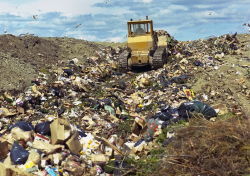
bulldozer_in_landfillI’m asking you to support a council-run green waste collection in Brighton & Hove with a pledge.
As some have noticed from my blogs and press work, I’m passionate about waste and recycling. I want to see Brighton & Hove at the forefront of best practice, aiming for zero waste. Unfortunately at the moment this is not the case, the city’s draft waste strategy has us planning to come in under the national targets for recycling and composting.

The first small step in trying to turn that around is arguing for a green waste collection in our city. This is something many people have called for, including the Older People’s Council, who rightly argue that many don’t have space to home compost, don’t have a car to drive waste to a collection point and can’t afford private pick-ups on a regular basis.

Based on what other councils provide, I expect we can provide a collection for a fee of around £50 a year. This would mean only those needing the service pay, it wouldn’t be supported by council tax, thus ensuring those without gardens aren’t paying for a service they can’t use.

To help convince the powers that be that this can be done I’m calling on everyone who’d like to use this service to pledge that they will sign up if we get the collections launched. Please signup at pledgebank.com/greenwaste and spread the word. Pledgebank wouldn’t let me specify the full area covered by the city, but if you live in Portslade, Hove, Brighton, Kemptown or Rottingdean then you can sign up.

To provide some context on what’s happening elsewhere and add to the pressure on the Council administration, here are some links:

Categories
notes from JK

Open Primaries: Right diagnosis, wrong solution

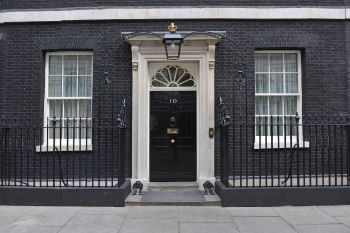
10 Downing Street

I was very interested to see the launch of the ‘Open Up’ campaign, with a very slick website and duck-house videos. I would expect nothing less given the people behind it including the immensely capable Becky Hogge, ORG’s former Executive Director.

There is as a whole swathe of campaigning going on at the moment calling for reform in one sense or another. This is extremely encouraging and welcome, it’s wonderful that people are speaking out and getting involved. More power to them.

However, I must take issue with Open Up’s proposed solution. I absolutely agree with their core argument that we need better and more diverse politicians. I think the poor quality of British politics and politicians is an absolutely critical issue at the moment.

In my view party political representative democracy is still the least worst option available to us. If we didn’t have parties we’d have to invent them. All lasting democracies develop groupings of some form another. But we urgently need to re-invigorate parties and our democratic institutions.

Interestingly the Speaker’s Conference in Parliament has recently been touching on these issues too. I took the opportunity to watch online the three party leaders speaking to the Conference: Cameron sounds more dynamic next to Brown but didn’t really say anything more significant. I felt Clegg was the most honest in admitting many of the people they need weren’t coming forward. He also argued that Westminster itself wasn’t the right kind of place to attract the people we need in politics.

We need better politicians

So if we accept that to improve our politics we need better politicians; then it follows that we need a more diverse set of candidates from a wider set of backgrounds. How are open primaries going to do that?

The argument is that because anyone can stand to be a candidate in an open primary, the barriers to ‘real people’ becoming candidates are lowered. People who aren’t party animals, more likely to be ‘mavericks’, will be more likely to stand. This is possibly the case but standing for an open primary then an actual general election doesn’t strike me as a low barrier, many will be put off by that. Furthermore there is no discussion of how to prevent the rich getting a head-start in winning an open primary.

This is one of several practical problems I see with open primaries. Another is that most parties cannot possibly afford to run open primaries where every elector in a constituency can vote for their candidate. The three largest parties are all in debt and the addition of this kind of process in every constituency would be beyond them let alone the smaller parties.

It would also be expensive for potential candidates, particularly if the primaries were truly ‘open’ allowing leafleting and canvassing across the constituency. Such primaries would further extend the length of time a potential candidate would need to dedicate to winning a Westminster seat. If a General Election goes to the wire (as this one looks to) then it can already be a two or three year unpaid commitment before we throw in a whole open primary process.

Finally there is a real risk of voter burnout once the novelty of open primaries has worn out. In a seat like Brighton Pavilion you could be looking at four or five primaries minimum then the General Election itself. There is evidence, particularly from the United States where some citizens vote on dozens posts and initiatives annually, that the more things people are asked to vote on, the less likely they are to vote. There can be too much of a good thing.

These are serious practical problems with open primaries which proponents don’t properly address, I’m not sure they can. There are also political problems with open primaries which mean they won’t deliver what proponents hope for.

Political problems

I believe open primaries will greatly increase the chance of politically naive candidates being selected. I don’t just mean innocent about the ways of politics (though that could be an issue that impacts on their effectiveness as MPs), but that candidates could genuinely not understand or know the range of a party’s policies before being selected.

Imagine a popular local figure gets selected for a party in an open primary then wins the General Election to become an MP by campaigning on, for example, health and policing. This MP is asked by their party whips to vote on a variety of issues in ways they don’t support such as education or civil partnerships. What do they do? Most parties use peer pressure and whips to enforce party discipline and ensure that policies are pushed through (if they are in government). If you vote for a candidate from a certain party shouldn’t you expect them to generally be in line with that party’s core values and policies? How will open primaries, when people of all and no party affiliation have a hand in selecting a party’s candidate ensure some compatibility with a party’s values?

We don’t want to see only the most loyal, grovelling party animals selected as candidates. Absolutely not. But we also don’t want people to become disenchanted because they voted for a certain party only to find the candidate isn’t really in line with what the party represents. Rebels have an important place in Parliament at critical times, but systematic rebellion (pre-planned or unintentional through naivety) is a recipe for chaos, not reasoned legislative work.

Open primaries also don’t alter the electoral reality of safe seats. Unless extremely ineffective or corrupt, most sitting MPs will have an inherent advantage in any selection whether it’s an open primary or internal party process. That’s just how it is, they have the profile and the contacts. Open primaries don’t neutralise incumbency, and we see in the US that it’s still reported as unusual for a sitting politician to lose their party’s selection through a primary if seeking re-election.

We need reform and a new political culture

We need a new culture of politics, one that is more open, honest and transparent. I admire the energy and passion of the Open Up campaign, but disagree with their prescribed solution. Open primaries will be prohibitively expensive for parties and candidates, will burn out voters, could result in candidates not truly representing the party label they stand for whilst failing to address the problem of safe seats.

Changing the culture in our politics requires a more open media, a redesigned educational system, a new constitution, reform of political funding, a recall process and most importantly — a system of proportional representation to elect members to both houses of Parliament. Call for open primaries distracts from these key requirements in the reform agenda.

I believe party politics has a great future ahead of it, if we can increase the number and quality of parties. We need smaller parties that can be more representative of specific groups in our society, more flexible, responsive and less hamstrung by the internal coalitions and simmering disagreement that the large parties of today represent.

This would force greater collaboration, more discourse as opposed to bombastic posturing and a richer, better politics for our country. What do you think?

Categories
notes from JK

Climate Change: It’s happening…

Share photos on twitter with Twitpic

Today is Blog Action Day 2009 and the theme is Climate Change. An easy one for me to support!

If you’re still in doubt then take a look at Google Earth’s climate change page (with intro narrated by the one and only Al Gore). Zac Goldsmith made an excellent point on Newsnight last night… that people are desperate for political leadership on this issue. I agree, but don’t think Cameron is the man to do it! Greenpeace made a similar point with their marvellous “Change the Politics, Save the Climate” action on Parliament.

Ways to take action:

Categories
notes from JK voting

A bad day for the public interest

What a strange day it has been. I’ve had a very productive time at work whilst lots of other things have been bubbling over:

  • London Elects and the Greater London Returning Officer (the people responsible for the London Mayoral and Assembly elections) had asked for responses to their cost-benefit analysis of manual vs e-counting in 2012. I had just completed ORG’s response earlier this week, which argued that given the £1.5m saving from going manual, there seemed to be no good reason for e-counting. Today was a ’round table’ to also explore issues covered in the analysis. However rather than being the consultation event we expected, ORG’s Executive Director was told that the decision to e-count the 2012 London election had already been taken. Not even a pretence of keeping an open mind! No proper debate or consideration has taken place, just a firm commitment to press ahead with e-counting regardless of costs or consequences.
  • Meanwhile in Brighton & Hove I submitted a formal request to Brighton & Hove City Council’s acting Chief Executive that he ‘call-in’ a decision made by the Tory Cabinet earlier this month. This means the decision is suspended and hopefully will be examined by a scrutiny committee. Why? Because the reports for the decision, over pedestrianising parts of East Street,  failed to include comments from any residents in spite of several having provided detailed objections. Council decisions cannot be based on consultations which have failed to include residents views. This just makes people (more) cynical about consultations and prevents decisions being taken on the balanced information.
  • Finally some Freedom of Information requests I put in some time ago have come to fruition, somewhat explaining why such huge rent rises are being demanded from seafront businesses. The reason? A big fat commission-based fee for the consultant leading the rent reviews for the Council. More details in “Huge consultant fees encourage seafront rent hikes“.
Categories
notes from JK

“Waste: Uncovering the Global Food Scandal” by Tristram Stuart: A review

It was through waste and recycling that I first became a ‘green’. At my junior school I remember putting posters up encouraging my fellow pupils to recycle more cans, paper and cardboard.

What we consider ‘waste’ is deeply telling on our attitudes to food, the environment and consumption. As any archeologist can attest, waste reveals huge amounts about a society.

That ‘western’ lifestyles are wasteful probably will come as no surprise to most of Tristram Stuart’s readers. But the scale of the problem and its full ramifications are not quite so easy to grasp. Through a considerable amount of travel, some serious number crunching and lots of dumpster diving Stuart paints the full, shameful picture of our food waste problem.

Reading Stuart’s book is deeply exasperating in many places, through no fault of the author. It’s just frustrating to see so many obvious solutions to many of the problems Stuart examines. That companies allow themselves to waste huge amounts of valuable resources is not only unethical but bad business. That so many governments have failed to adequately tackle waste is plain irresponsible. Food waste means less food for the hungry and an environmental cost paid to grow/raise food which is never consumed.

Rather than rehearse the whole book, which is excellent, I urge you to read it. The calculations on the true costs of food waste are eye-popping as are the estimates that roughly half of all food produced is wasted between plough and plate. It’s an engaging and deeply worthwhile book. Thank you Tristram.

Buy from Amazon: Waste: Uncovering the Global Food Scandal
(I get a small referral if you use this link)

Categories
notes from JK

Links 10-09-2009

A few links I’d like to push your way:

  • Disappointed, but hopeful”
    Rupert and my response to the result of the Green Party executive elections.
  • Stop Disconnection Without Trial
    Support the Open Rights Group’s campaign to stop Lord Mandelson’s barmy plan to disconnect suspected file-sharers.
  • Reheat Britain
    A much better idea than the car scrappage scheme — a boiler scrappage scheme. Of course upgrading boilers alone isn’t the answer, but it’s a start and while they’re there I’m sure the fitters will be keen to offer insulation and other energy efficiency services.