Categories
notes from JK

Dealing with green waste: Brighton & Hove vs the world

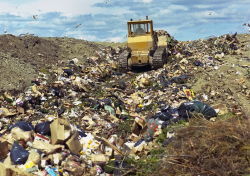
bulldozer_in_landfillI’m asking you to support a council-run green waste collection in Brighton & Hove with a pledge.

As some have noticed from my blogs and press work, I’m passionate about waste and recycling. I want to see Brighton & Hove at the forefront of best practice, aiming for zero waste. Unfortunately at the moment this is not the case, the city’s draft waste strategy has us planning to come in under the national targets for recycling and composting.

The first small step in trying to turn that around is arguing for a green waste collection in our city. This is something many people have called for, including the Older People’s Council, who rightly argue that many don’t have space to home compost, don’t have a car to drive waste to a collection point and can’t afford private pick-ups on a regular basis.

Based on what other councils provide, I expect we can provide a collection for a fee of around £50 a year. This would mean only those needing the service pay, it wouldn’t be supported by council tax, thus ensuring those without gardens aren’t paying for a service they can’t use.

To help convince the powers that be that this can be done I’m calling on everyone who’d like to use this service to pledge that they will sign up if we get the collections launched. Please signup at pledgebank.com/greenwaste and spread the word. Pledgebank wouldn’t let me specify the full area covered by the city, but if you live in Portslade, Hove, Brighton, Kemptown or Rottingdean then you can sign up.

To provide some context on what’s happening elsewhere and add to the pressure on the Council administration, here are some links:

Categories
notes from JK

Open Primaries: Right diagnosis, wrong solution

10 Downing Street

I was very interested to see the launch of the ‘Open Up’ campaign, with a very slick website and duck-house videos. I would expect nothing less given the people behind it including the immensely capable Becky Hogge, ORG’s former Executive Director.

There is as a whole swathe of campaigning going on at the moment calling for reform in one sense or another. This is extremely encouraging and welcome, it’s wonderful that people are speaking out and getting involved. More power to them.

However, I must take issue with Open Up’s proposed solution. I absolutely agree with their core argument that we need better and more diverse politicians. I think the poor quality of British politics and politicians is an absolutely critical issue at the moment.

In my view party political representative democracy is still the least worst option available to us. If we didn’t have parties we’d have to invent them. All lasting democracies develop groupings of some form another. But we urgently need to re-invigorate parties and our democratic institutions.

Interestingly the Speaker’s Conference in Parliament has recently been touching on these issues too. I took the opportunity to watch online the three party leaders speaking to the Conference: Cameron sounds more dynamic next to Brown but didn’t really say anything more significant. I felt Clegg was the most honest in admitting many of the people they need weren’t coming forward. He also argued that Westminster itself wasn’t the right kind of place to attract the people we need in politics.

We need better politicians

So if we accept that to improve our politics we need better politicians; then it follows that we need a more diverse set of candidates from a wider set of backgrounds. How are open primaries going to do that?

The argument is that because anyone can stand to be a candidate in an open primary, the barriers to ‘real people’ becoming candidates are lowered. People who aren’t party animals, more likely to be ‘mavericks’, will be more likely to stand. This is possibly the case but standing for an open primary then an actual general election doesn’t strike me as a low barrier, many will be put off by that. Furthermore there is no discussion of how to prevent the rich getting a head-start in winning an open primary.

This is one of several practical problems I see with open primaries. Another is that most parties cannot possibly afford to run open primaries where every elector in a constituency can vote for their candidate. The three largest parties are all in debt and the addition of this kind of process in every constituency would be beyond them let alone the smaller parties.

It would also be expensive for potential candidates, particularly if the primaries were truly ‘open’ allowing leafleting and canvassing across the constituency. Such primaries would further extend the length of time a potential candidate would need to dedicate to winning a Westminster seat. If a General Election goes to the wire (as this one looks to) then it can already be a two or three year unpaid commitment before we throw in a whole open primary process.

Finally there is a real risk of voter burnout once the novelty of open primaries has worn out. In a seat like Brighton Pavilion you could be looking at four or five primaries minimum then the General Election itself. There is evidence, particularly from the United States where some citizens vote on dozens posts and initiatives annually, that the more things people are asked to vote on, the less likely they are to vote. There can be too much of a good thing.

These are serious practical problems with open primaries which proponents don’t properly address, I’m not sure they can. There are also political problems with open primaries which mean they won’t deliver what proponents hope for.

Political problems

I believe open primaries will greatly increase the chance of politically naive candidates being selected. I don’t just mean innocent about the ways of politics (though that could be an issue that impacts on their effectiveness as MPs), but that candidates could genuinely not understand or know the range of a party’s policies before being selected.

Imagine a popular local figure gets selected for a party in an open primary then wins the General Election to become an MP by campaigning on, for example, health and policing. This MP is asked by their party whips to vote on a variety of issues in ways they don’t support such as education or civil partnerships. What do they do? Most parties use peer pressure and whips to enforce party discipline and ensure that policies are pushed through (if they are in government). If you vote for a candidate from a certain party shouldn’t you expect them to generally be in line with that party’s core values and policies? How will open primaries, when people of all and no party affiliation have a hand in selecting a party’s candidate ensure some compatibility with a party’s values?

We don’t want to see only the most loyal, grovelling party animals selected as candidates. Absolutely not. But we also don’t want people to become disenchanted because they voted for a certain party only to find the candidate isn’t really in line with what the party represents. Rebels have an important place in Parliament at critical times, but systematic rebellion (pre-planned or unintentional through naivety) is a recipe for chaos, not reasoned legislative work.

Open primaries also don’t alter the electoral reality of safe seats. Unless extremely ineffective or corrupt, most sitting MPs will have an inherent advantage in any selection whether it’s an open primary or internal party process. That’s just how it is, they have the profile and the contacts. Open primaries don’t neutralise incumbency, and we see in the US that it’s still reported as unusual for a sitting politician to lose their party’s selection through a primary if seeking re-election.

We need reform and a new political culture

We need a new culture of politics, one that is more open, honest and transparent. I admire the energy and passion of the Open Up campaign, but disagree with their prescribed solution. Open primaries will be prohibitively expensive for parties and candidates, will burn out voters, could result in candidates not truly representing the party label they stand for whilst failing to address the problem of safe seats.

Changing the culture in our politics requires a more open media, a redesigned educational system, a new constitution, reform of political funding, a recall process and most importantly — a system of proportional representation to elect members to both houses of Parliament. Call for open primaries distracts from these key requirements in the reform agenda.

I believe party politics has a great future ahead of it, if we can increase the number and quality of parties. We need smaller parties that can be more representative of specific groups in our society, more flexible, responsive and less hamstrung by the internal coalitions and simmering disagreement that the large parties of today represent.

This would force greater collaboration, more discourse as opposed to bombastic posturing and a richer, better politics for our country. What do you think?


Categories
notes from JK

Climate Change: It’s happening…

Share photos on twitter with Twitpic

Today is Blog Action Day 2009 and the theme is Climate Change. An easy one for me to support!

If you’re still in doubt then take a look at Google Earth’s climate change page (with intro narrated by the one and only Al Gore). Zac Goldsmith made an excellent point on Newsnight last night… that people are desperate for political leadership on this issue. I agree, but don’t think Cameron is the man to do it! Greenpeace made a similar point with their marvellous “Change the Politics, Save the Climate” action on Parliament.

Ways to take action:

Categories
notes from JK voting

A bad day for the public interest

What a strange day it has been. I’ve had a very productive time at work whilst lots of other things have been bubbling over:

  • London Elects and the Greater London Returning Officer (the people responsible for the London Mayoral and Assembly elections) had asked for responses to their cost-benefit analysis of manual vs e-counting in 2012. I had just completed ORG’s response earlier this week, which argued that given the £1.5m saving from going manual, there seemed to be no good reason for e-counting. Today was a ’round table’ to also explore issues covered in the analysis. However rather than being the consultation event we expected, ORG’s Executive Director was told that the decision to e-count the 2012 London election had already been taken. Not even a pretence of keeping an open mind! No proper debate or consideration has taken place, just a firm commitment to press ahead with e-counting regardless of costs or consequences.
  • Meanwhile in Brighton & Hove I submitted a formal request to Brighton & Hove City Council’s acting Chief Executive that he ‘call-in’ a decision made by the Tory Cabinet earlier this month. This means the decision is suspended and hopefully will be examined by a scrutiny committee. Why? Because the reports for the decision, over pedestrianising parts of East Street,  failed to include comments from any residents in spite of several having provided detailed objections. Council decisions cannot be based on consultations which have failed to include residents views. This just makes people (more) cynical about consultations and prevents decisions being taken on the balanced information.
  • Finally some Freedom of Information requests I put in some time ago have come to fruition, somewhat explaining why such huge rent rises are being demanded from seafront businesses. The reason? A big fat commission-based fee for the consultant leading the rent reviews for the Council. More details in “Huge consultant fees encourage seafront rent hikes“.
Categories
notes from JK

“Waste: Uncovering the Global Food Scandal” by Tristram Stuart: A review

It was through waste and recycling that I first became a ‘green’. At my junior school I remember putting posters up encouraging my fellow pupils to recycle more cans, paper and cardboard.

What we consider ‘waste’ is deeply telling on our attitudes to food, the environment and consumption. As any archeologist can attest, waste reveals huge amounts about a society.

That ‘western’ lifestyles are wasteful probably will come as no surprise to most of Tristram Stuart’s readers. But the scale of the problem and its full ramifications are not quite so easy to grasp. Through a considerable amount of travel, some serious number crunching and lots of dumpster diving Stuart paints the full, shameful picture of our food waste problem.

Reading Stuart’s book is deeply exasperating in many places, through no fault of the author. It’s just frustrating to see so many obvious solutions to many of the problems Stuart examines. That companies allow themselves to waste huge amounts of valuable resources is not only unethical but bad business. That so many governments have failed to adequately tackle waste is plain irresponsible. Food waste means less food for the hungry and an environmental cost paid to grow/raise food which is never consumed.

Rather than rehearse the whole book, which is excellent, I urge you to read it. The calculations on the true costs of food waste are eye-popping as are the estimates that roughly half of all food produced is wasted between plough and plate. It’s an engaging and deeply worthwhile book. Thank you Tristram.

Buy from Amazon: Waste: Uncovering the Global Food Scandal
(I get a small referral if you use this link)

Categories
notes from JK

Links 10-09-2009

A few links I’d like to push your way:

  • Disappointed, but hopeful”
    Rupert and my response to the result of the Green Party executive elections.
  • Stop Disconnection Without Trial
    Support the Open Rights Group’s campaign to stop Lord Mandelson’s barmy plan to disconnect suspected file-sharers.
  • Reheat Britain
    A much better idea than the car scrappage scheme — a boiler scrappage scheme. Of course upgrading boilers alone isn’t the answer, but it’s a start and while they’re there I’m sure the fitters will be keen to offer insulation and other energy efficiency services.
Categories
notes from JK

Election suspended: Where next?

Green Party members should have by now received notice that the internal election for External Communications co-ordinator has been suspended. Sadly GPEx’s failure to be open & transparent and their continued control freakery created the problems we currently face.

We (Rupert & Jason) wanted an open, democratic process where members’ voices would count; where our different ideas and priorities for the party could be debated. Unfortunately the predictable consequences of some of GPEx’s decisions have started to emerge. That these have halted the election is deeply worrying, we have not been told who requested the returning officer to halt the process. We believe this halt is unconstitutional, it is clear that ALL members have to be balloted if two or more valid nominations are received.

Our hopes for an open, inclusive process continue to be thwarted. First the rules clearly allowed for candidates to mail each member a leaflet, we were told this rule had been left in as a ‘drafting oversight’ and would not be used.

We wanted to speak to members but were told that canvassing was not permitted and no member lists would be provided.

We spoke to our existing contacts and we were warned we could be straying into forbidden canvassing territory.

We have campaigned on the allowed mediums of websites and member elists, but came under concerted pressure for being too open. Yet this open approach engaged with a broad spectrum of the membership. That our endorsers cover a wide geographical range and backgrounds shows that breadth.

Our core arguments for professionalism, openness & transparency remain. Our other key planks that the party needs to be bolder and protect the Freepost scheme still stand.

If the current GPEx had been more open and transparent we may well not have got to the election being suspended. They should have consulted with the wider party on key decisions like:

* Changes to the scale/nature of the Freepost scheme
* Changes to political strategy

We believe it is deeply unfair to exclude the members who cannot or chose not to attend conference. As conference is in Brighton & Hove this autumn it’s particularly far for people in areas of the North to attend.

We await the resumption of the election process, in the meantime as active members and councillors we’ll keep debating what we believe are the party’s key priorities for the next year.

To clarify:

* We were not consulted on the election suspension, just informed once the decision had been taken.

* Only Rupert & I are acting on behalf of our campaign (whatever you call it during this limbo period!). Mark’s letter was his own initiative which we did not initiate or approve. The only thing Mark did at our request was provide an endorsement we used on this site.

Why are we blaming GPEx? Because if they had resolved the issue of the Freepost quickly and clearly things wouldn’t have got to this. Mark, as contractor to the party, had to make significant financial commitments (which put his family finances and employees at risk) to ensure the scheme could be delivered. With unresolved doubts about deposits and the scale the scheme would take Mark has been left in an impossible situation.

I would not have taken the approach he has done, but GPEx having received his increasingly urgent pleas, should have provided him the clarity one way or the other that he needed.

So to recap, it’s deeply regrettable that we are here and people might have taken alternative approaches, but GPEx could have headed this problem off LONG AGO.

Footnote
How the election for External Communications co-ordinator will now work (directly from the ERO) as of 13th August:

“The nominations will close and be elected at conference as per any other GPEx post where the nominations close at conference. I.e. they will close at 10am on Friday 4th September and voting will be on Saturday 5th September on presentation of a Saturday plenaries voting card. The candidates statement booklet advises that this is to be from 14:20 to 15:20 and from 17:00 to 19:30.

“There will be no proxy voting. It will be conducted in the same way as a usual election for which nominations close at conference and are elected at conference.”

PS This was originally a post and a comment on our campaign site which has been closed while the election is suspended. I wasn’t able to bring over other people’s comments from that post without them all being from me — please repost if you wish.

Categories
notes from JK

Bike for life: First cycling experiences

Riding the Rothan balance bikeSeeing yet another advert for cheap supermarket bicycles reminded of an article I read a while ago about ‘Bike Shaped Objects’. It was by the very knowledgeable and helpful folks at South Coast Bikes (who I can highly recommend for bike servicing). “An impassioned guide on why not buy a cheap Bike or BSO” makes for excellent reading.

In essence the argument is that bikes are complicated, the simplest needing hundreds of precision parts, and that quality bikes are relatively speaking cheaper than ever. As supermarket bikes don’t last and don’t ride well they’re not good value at all.

I remember helping to find a first bike for my nephew a few years ago and then for my daughter more recently. The usual shops sold these incredibly heavy, bulky bikes which were difficult to move and seemed poorly welded together. Being used to a decent but low-end mountain bike for most of my cycling life I was stunned at how heavy these bikes were given their size and proposed users.

A child won’t engage with a bike which is too heavy for them to manhandle and which could crush if it falls on them. My daughter started with a pink thing with stabilisers which felt like it was made from cast iron. She could barely make it move and soon lost interest.

Having been a keen cyclist on and off for many years I didn’t want her to miss out on cycling. So I did more research and spoke to some friends (particularly fellow Green councillor Ian Davey) concluding that ‘like-a-bikes’ were a better starting point. These are bikes without pedals essentially so kids can learn balance without worrying about the pedals.

I saw plenty of these in wood and plastic which somehow or other didn’t convince and seemed quite pricey. Then, I don’t recall how, I came across Islabikes ‘the childrens bikes specialist’.

Wow. They make proper bikes, but for little people. Perfect.

We got my daughter the ‘Rothan’ balance bike which she absolutely adores and uses all the time. It’s solidly built, has a brake (which is good for downhill escapades and to get her familiar with the concept) plus it’s really light being based on an alloy frame. She picks it up, takes it out and zooms on her own. Marvellous.

I believe setting a positive first experience with biking should help her to be a positive cyclist for life. Someone who enjoys cycling as a way to get around, to explore and to keep fit. For a little bit more than a supermarket ‘bike shaped object’ I hope she’ll be well on the road to bike for life.

Categories
notes from JK

Campaign Launch: Rupert & Jason for External Communications

Today Cllr Rupert Read and I are launching our campaign to become the joint External Communications co-ordinator for the Green Party’s national executive.

We believe we have the campaigning, communications and management experience to deliver winning campaigns in this General Election year. As elected councillors from two of the top target constituencies (Rupert from Norwich, Jason from Brighton) we can help ensure close collaboration during this critical year.

You can read more about our experience, previous comms work and campaign pledges at www.vote-rupert-jason.org.uk

Categories
notes from JK

Reflections on the Green win in Goldsmid

Going down with swine flu in the final few days of the Goldsmid campaign was pretty galling. I missed those golden last days of campaigning and of course the count…

When party chair Simon Williams rang me with the result I couldn’t believe what I was hearing, the result was beyond my expectations. I had been quietly hoping for a narrow victory over the Tories, but a 350 vote margin – wow! Amy summed it up best with “Goldsmid: Epic Green Win”

Turnout was 9 points above the Regency by-election, I think a sign of the greater interest in the Goldsmid result and warmer weather (the Regency by-election was on a cold 13th December).

There has been some debate in the blogosphere over why people voted Green. Labour activist Dan Wilson argues Greens aren’t passionate about the city, that we’re using it as a vehicle for Westminster success. Nevertheless Wilson also claims Greens don’t have any achievements from 13 years on the council.

All I can say to Dan is, if we didn’t care about this city there’s no way we’d still be working our socks off 13 years later! Many changes were Green initiated from council webcasts to refusing directly elected mayors, much more in our archives.

I think Brighton Politics blogger is right to surmise that Labour’s collapse in support in Goldsmid had many good national and local reasons and that the city’s political landscape has changed. (Former?) Labour activist Neil Harding also agreed with this analysis. Of course fellow Green Cllr Ben Duncan also was keen to celebrate our success.

Mary Mears and others were quick to criticise our policies or claim our leaflets had been misleading. They somehow arrogantly prefer to assume that voters are stupid than actually believe voters may have preferred the policies and approach used by the Green Party! Perhaps easier for our opponents to swallow when facing our second straight by-election win, first seat won off a Tory and first seat in Hove.

Having lead the design and writing of all of our leaflets in Goldsmid I’m very confident in stating they were truthful and straightforward. We discussed our policies on:

  • Education
  • Employment
  • Energy efficiency
  • Housing
  • Honesty & Integrity in public life
  • Older people
  • Transport
  • Waste & Recycling

We also touched on our opposition to privatisation, ID cards, nuclear power & weapons, wars and council tax.

We additionally exposed some of the cosy votes Tories and Labour have taken together, giving each other additional allowances as well as forcing in the new council constitution a year early. Our leaflets had to rebut some of the false allegations from others and explain to voters that Alex was blocked by the Tory mayor from speaking on residents’ behalf.

I’m very happy with how the leaflets were received. Based on what I’ve seen from the opposition we not only covered far more policy than all the others combined, we were more positive and avoided personal attacks.

The other parties were all misleading about us at some point or another but Labour, as usual, excelled in false allegations. They claimed that Alex hadn’t attended local meetings when she had (in fact despite Labour Cllr Melanie Davies trying to block her), claimed Alex was a student when she isn’t and claimed she works for Caroline Lucas MEP when she doesn’t.

So, unless there’s truly a skeleton in the closet to be exposed, I think once again we see negative campaigning doesn’t work.

The Green success story continues, we’re set for more hard work in winning votes for the General Election. And the Green group of councillors know we need to work harder than ever to make this council work for the city and keep people’s faith in us. With power so finely balanced lots of negotiation and detailed proposals will be required but we might, just might, be able to get more Green policies in place if councillors in all parties can stay open minded and resist petty back-biting. We shall see…