Categories
notes from JK

Speech to Green Party Spring Conference 2013

Here is the text of the speech I delivered to party conference this morning:

Good morning conference.

I’m happy to report to you that your Green councillors in Brighton & Hove are working hard to keep delivering Green policies for the city.

As I speak a city-wide 20mph limit is being rolled out for a healthier, safer city while wonderful new cycling and walking infrastructure is being installed to improve some of our major routes and most difficult junctions.

We are building new affordable homes and we have ended council tax discounts for second homes.

Our City Plan for the next 20 years has been passed, embedding Green thinking in the heart of every planning application the city will see for decades.

The city council is working to annual carbon budgets and is on course to lead the world’s first One Planet City.

We continue to lead the most open, participative and inclusive council we can. This leadership, with our neighbouring councils, has just won us a City Deal for the Greater Brighton region which will bring new devolved powers and investment opportunities.

This is all in the face of a coalition government that is hostile to our values in so many ways. We reject government austerity measures which are harming local communities.

Take their so-called ‘welfare reforms’ for example: So much time and energy has been wasted on countless cuts just to appease Daily Mail journalists who think this is where public funds are being wasted – on benefits.

But that isn’t the truth. The shameful truth is we have the outrage of government cutting benefits to those least able to afford whilst spending billions on new submarines, aircraft carriers and nuclear weapons we do not need.

The government’s benefit cap policy is a cynical, populist move which will mostly hit large families, many with members struggling in low-paid work.

Meanwhile Liam Byrne MP has confirmed that Labour too would have a benefit cap and would keep cutting the benefits bill. Other Labour MPs confirm cuts to local government too. We have all three mainstream parties committed to backing rich over the poor.

Despite the occasional glimmer, Labour does little other than remix Conservative policies in the same toxic vat as the one Blair, Clegg and Cameron tried. It’s a travesty that this country lurches from one government to another on the basis that they’re not quite as bad as whoever is in power… until they are.

We cannot let them get away with this.

So we need to speak out and ask “What kind of society do we want to live in?”

The Tory vision of people going hungry and cold in our country, with shameful levels of child poverty and families turfed out of their homes? One where wealth is transferred from the poorest to the richest?

Or a progressive vision where nobody is left behind, where those with greatest need receive the most help, and where inequality is challenged.

This conference we remember that 40 years ago Europe’s first Green Party was started by our colleagues in this country. A party with a clear vision for the future. One that believes and does localism.

The only party serious about real localism, so we should shout about it.

We are the only party with a coherent vision on welfare and sustainable local government.

A reversal of the privatisation of the NHS, and an end to the scandals it’s already brought to communities like Lewisham

True local taxation and powers to help protect local services from mad national austerity measures.

We must speak out, and give people the hope of a genuine alternative.

I’m passionate about local government. Municipal pride and creativity are Green values that we need to rekindle in town halls across the country. Councils need to be more self-confident, bold and demand greater local freedoms.

But we must always remember councils will exist in contexts beyond our immediate control. While national government remains able to re-write the rulebook and take away resources at a whim, it will always be difficult

Being in administration of a council, as in Brighton & Hove, is like taking the captaincy of a ship. We cannot control the waters ahead, whether they be stormy or calm. But we must complete the journey, safely transporting all aboard, whether battered by storms or baked by the sun. We will not founder. Guided by our Green principles and by pulling together as a party, we will continue forward, delivering progress for residents in Brighton and Hove and showing the real change a Green-led council can achieve.
Categories
notes from JK

Comment on Welfare Reform from a Council perspective

I had the following comment piece published in The Argus yesterday as a ‘Thursday Soapboax’:

The government is continuing to impose its austerity cuts to welfare support and local public sector budgets.


I believe what Philip Jones referred to in his soapbox piece (The Argus 14th February) as a “Sick Tax” is the government’s 16% real terms cut to what was once Council Tax Benefit. From 1st April it has been localised to councils as a council tax discount labelled by government as “Council Tax Reduction”.


Like everywhere else, our council has no choice but to locally administer this slashed scheme, whilst also coping with yet another year of huge government cuts to our funding. The Green administration’s budget proposals have, despite huge financial pressures, absorbed almost half the cut to council tax benefit and set aside up to £600,000 in discretionary funds to help those worst hit by these and other government cuts to benefits.


We have had to prepare for this at breakneck speed – producing a legally correct local scheme and software to manage it in very short order. Indeed all the council leaders in the South East, most of whom are Conservatives, have repeatedly written to ministers objecting to the speed and scale of these changes. In spite of these pressures Brighton & Hove City Council have been widely praised for the extensive consultation we have done since last summer on our scheme. Meanwhile we have proactively contacted all those affected by phone and letter to help advise them on how we and our partners can help.


With our scarce funds we have been able to ensure nobody affected by Council Tax Reduction will pay more than £3 extra a week this coming year, and most will pay far less. It’s worth remembering that council tax is assessed on a household basis and not individual. So Mr Jones is wrong to say that we are in any way targeting sick people, quite the contrary.


Ultimately we are all victims in the face of very poorly implemented, heartless Conservative-led government policies. Come 1st April our city will be hit with the cuts to council funding including council tax benefit, the bedroom tax and cuts to housing benefit too. Liam Byrne MP says, if in government, Labour too would continue to cut benefits spending and the city’s two Tory MPs don’t seem to understand what they are doing to their own constituents. It’s tragic that the three largest parties in Westminster all seem to think building nuclear weapons and aircraft carriers whilst cutting support for our poorest is the best way forward for our country. Greens utterly disagree.

Categories
notes from JK

Peter James and the Mobile Library

Online and on paper there are some references today to renown local author Peter James’ views on the mobile library. What isn’t explained in reports is how he acknowledged the Green administration’s arguments. Last week Peter wrote to Cllr Geoffrey Bowden, chair of the Economic Development & Culture Committee, on the subject of the mobile library. Geoffrey is responsible for the library service amongst many other things. With his permission, and Peter’s too, I publish below their email conversation which speaks for itself…


On 14/02/2013 05:49, Peter James wrote:

Dear Mr Bowden

I understand that there will be a debate about the Mobile Library today.

Both as a local author and in my capacity as Chair of the Crime Writer Association, I write to you to implore you, from the bottom of my heart, to please look favourably on saving this valuable part of our library network.

If it had not been for the libraries, when I was a child growning up in Brighton, I don’t think I would ever have become a writer, for was in those that I discovered my love of books.

In today’s harsh economic times, fewer and fewer people are able to afford book, and libraries are their lifeline. The mobile serves so many people, including the elderly and equally importantly youngsters with decreasing access to books, as more and more high street bookstores close.

I think that a city like ours really must support literature in every possible way. I know resources are stretched, but the cost of this service is very small in the overall scheme of things, and what it brings to the community is something quite priceless.

All my best

Peter

————
Peter James (Hons) D.Litt

 
On 14 Feb 2013, at 09:32, Geoffrey Bowden wrote:

Dear Peter

Many thanks for taking the trouble to write to me. Like you I am a great fan of mobile libraries, but there are some rather steep costs involved in keeping one on the road. We have been exploring all kinds of ways to achieve this but, in the end, have been forced to concede that it is simply not possible.

Here are some facts which will provide you with some of the background to the reluctant decision to end the service.

  • the current vehicle is coming to the end of its natural life and is getting more and more expensive to maintain
  • a new vehicle will cost £125,000 to purchase
  • the annual running costs exceed £80,000
  • Less than 800 people are currently registered to use the mobile library
  • 78% of the current users are also registered at and also use one of the static libraries near to their homes
  • 98% of the population live within a mile and a half of one of our static libraries, which are well served by buses and contain far more books
  • one of the possible options we examined to keeping the mobile on the road was to find a partner with whom to run it. No one in the voluntary sector or other public services (police, NHS or fire services) were interested or had the funds available either
  • at one point capital was identified to purchase a new vehicle, but with running costs taken into account, it would only have been possible to run a reduced service for three days a week stopping off at only the most popular locations. This would not have passed any independent value-for-money test (a test required for such expenditure) so was therefore voted down by the Policy & Resources committee which has ultimate sanction of expenditure over the £50,000 level
  • the mobile is therefore being replaced by a home delivery service, which has been particularly welcomed by the truly housebound, who are currently excluded even from visiting the mobile library. 500 people have already been identified for this service and they will now be given access to up to 500,000 books (instead of the very limited number held on the mobile) via laptops and tablets taken to their homes by volunteers and a dedicated member of staff, who will guide them through the online book ordering process. The books will then be delivered and taken away once read

We live in extremely difficult financial circumstances and if the Government was not stripping out £30 million from the council’s grant and restricting us raising money via the Council Tax to pay for all vital services, we would be able to contemplate purchasing a new vehicle and keeping it on the road six days a week. Sadly that isn’t the economic situation in which we find ourselves.

The upside of this otherwise sad tale is that, unlike Labour and Conservative run councils throughout the country who are closing down libraries wholesale, having long abandoned their mobiles, the Green administration has managed for a second year running to keep all its static libraries open. In fact we are about to build a new one in Woodingdean (replacing a 50 year old temporary Nissen hut with a state of the art library and medical centre).

I am sorry this is not the answer you hoped for, but sometimes we are forced into making tough decisions and this, sadly, is one of them.

With best wishes
Geoffrey
Cllr Geoffrey Bowden
Green Party Councillor Queen’s Park Ward
Chair, Economic Development and Culture Committee

 
On 14/02/2013 10:44, Peter James wrote:

Dear Geoffrey

I really appreciate your taking the time and trouble to respond in such detail, thank you very much.

Certainly your points and argument here make sense, and it is at least encouraging to know about the home delivery service.

Meantime on a very positive note, you do all have to be congratulated on keeping the static libraries open, and it is extremely good news to hear about Woodingdean.

All my best and again, thank you for such a reasoned and thorough explanation.

Peter
—————-

Peter James (Hons) D.Litt

Categories
notes from JK voting

Trip report – Estonia on e-voting, transport and politics

Meeting the Mayor of Tallinn
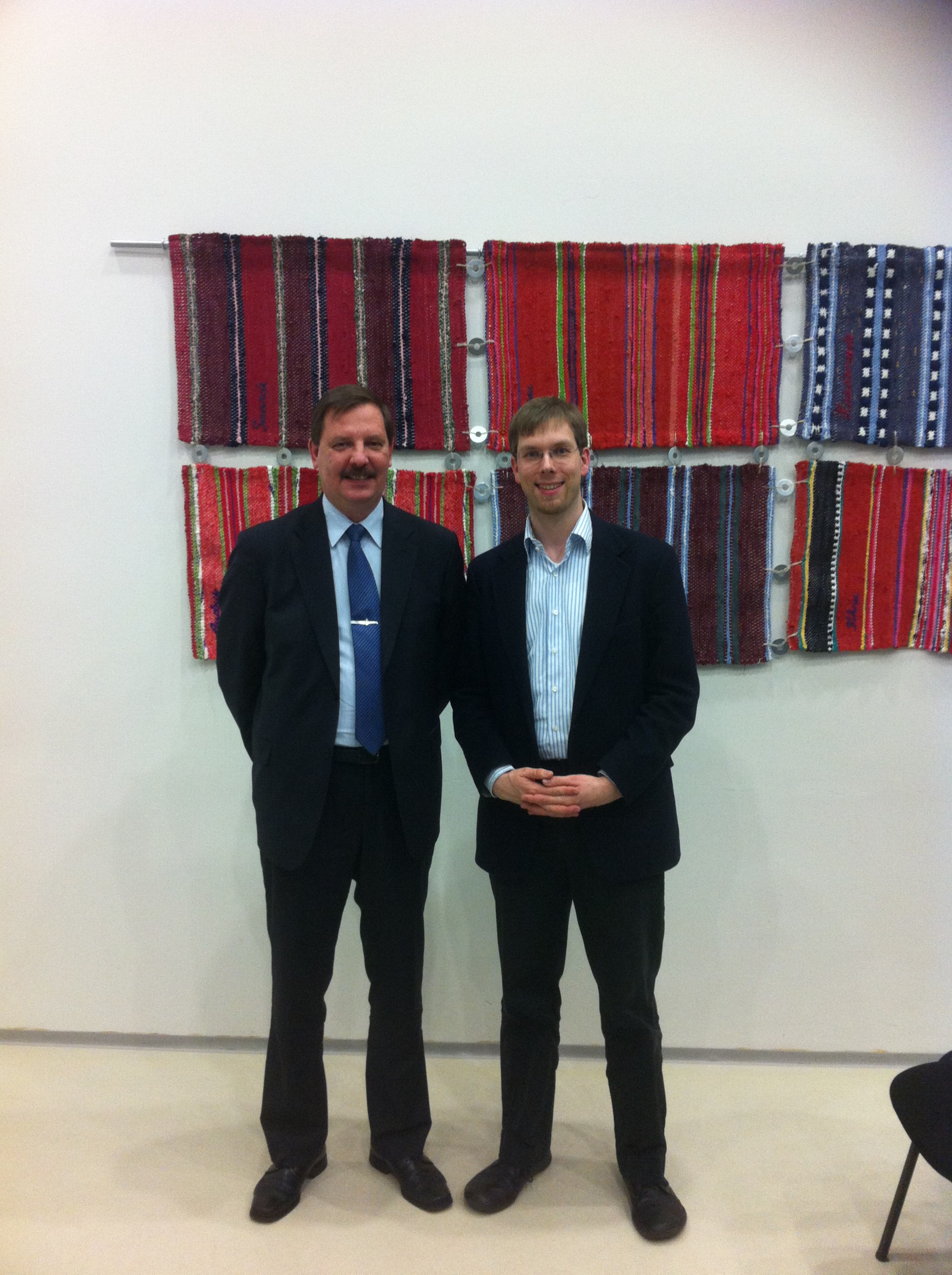
Meeting the Mayor of Tallinn, Mr Savisaar

At the beginning of February I spent three days in Estonia at the invitation and expense of Mr Edgar Savisaar, the Centre Party Mayor of Tallinn (and Estonia’s first post-Soviet prime minister). My visit had three main aims:

  1. To present some public lectures on my views and experiences opposing electronic voting. Estonia is the only country in the world to allow all citizens to vote by Internet in their Parliamentary elections.
  2. To learn more about Tallinn’s new policy of free public transport for citizens, which had launched on 1st January 2013.
  3. To explore how Estonia does local government and what I could learn from that, to build fruitful links between our universities and partners to support future investment and EU funding bids.

I spent most of the first day with Mr Savisaar including a formal lunch reception with a range of MPs, council officials and academics. Most of them shared deep concerns about the country’s internet voting system. This concern is a minority view in Estonia, especially in the Parliament. I have not had the opportunity to study the Estonian system in detail so cannot comment on specifics, but my friend and fellow e-voting campaigner Barbara Simons has posted her critical thoughts following her own visit and analysis of other reports.

My long held view against e-voting can be summarised as that the very significant risks introduced by the technology are not worth it, and the huge costs do not justify increasing electoral risks, as there are no other obvious benefits. Like the rest of Europe, Estonia has had to trim its national spending, so I found many Estonians agreeing that there were other priorities the money invested in e-voting could be better spent on.

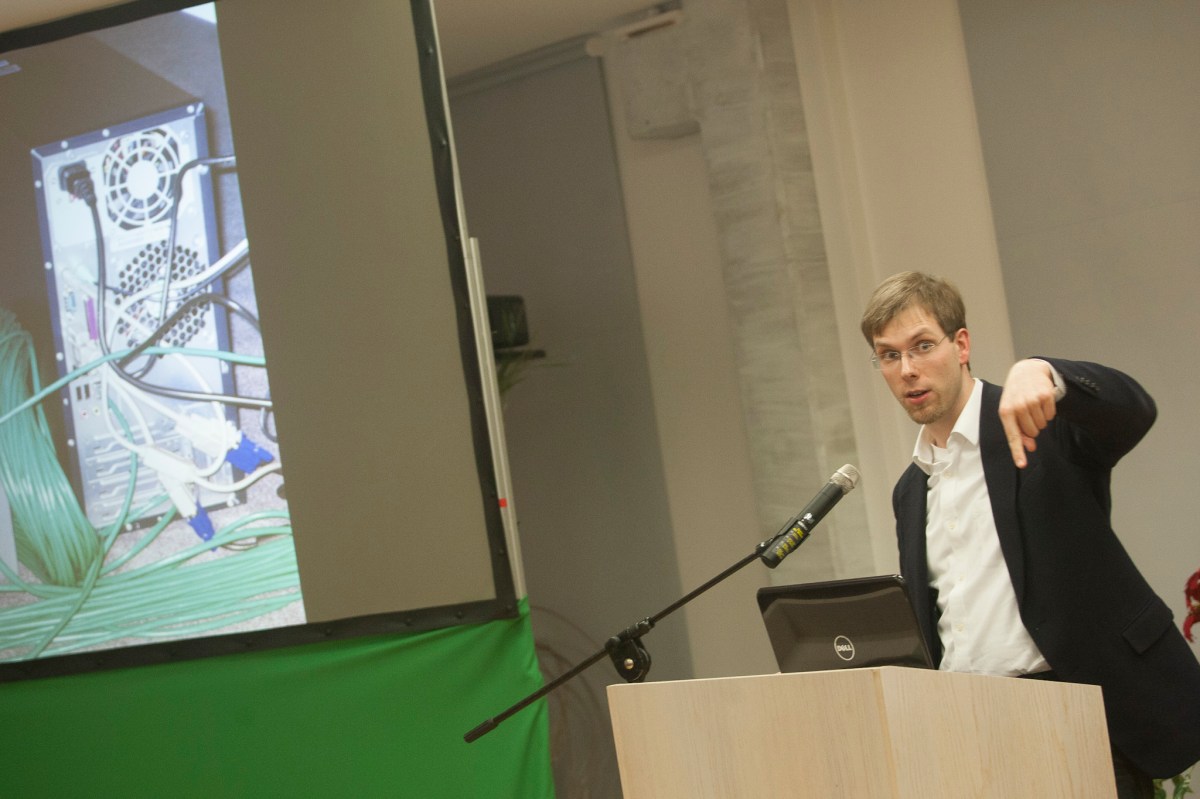
Giving a lecture on e-voting in Tallinn

Following meetings with officials detailing my experiences as ORG’s e-voting campaigns coordinator, plus sharing some ideas and contacts on how to further the Estonian campaign against e-voting, we went on to my first public lecture. This very well attended event was live translated into Estonian and Russian (there is a significant Russian-speaking population) and was recorded for a local TV station. You can see clips of the event and a follow-up interview here. Footage of the meeting earlier in the day is here and here. (I don’t know if the full video of my lecture will be released online, but it was an evolution of my 2007 presentation of ORG’s election observation which can be watched here)

The next day I had an early morning meeting with Ivar Tallo, a former MP and e-government lecturer, who is a well known supporter of Estonia’s e-voting. We had a good conversation but didn’t settle our differences for and against e-voting! Then with Priit Toobal MP, one of Mr Savisaar’s assistants and a translator we went on a small tour of the country visiting Paide city (right in the centre of the country) and Parnu (a popular coastal summer resort town). I met MPs and councillors in each place whilst also presenting a shorter version of my e-voting lecture.

All the meetings and conservations gave me some interesting insights into Estonia’s advanced e-government infrastructure, the development challenges as population is drawn inexorably towards the capital city of Tallinn along with views and experiences of Tallinn’s free public transport. I learnt from Vice-Mayor Taavi Aas that in January bus usage had jumped about 15% whilst traffic at key central junctions in Tallinn had dropped 20%. Early days yet, but interesting. I also completely ran out of brochures for the Universities of Sussex and Brighton.

With Taavi Aas, Vice-Mayor of Tallinn responsible for transport

I doubt many use it, but I was impressed that the Estonian infrastructure allows citizens to see who (in and out of government) has accessed their identity information with a full log and lets citizens control who can view their online medical data. Citizen-centric data management seems to be an important step towards our digital future. I would urge more investment there than in online voting methods!

I was also interested to learn that local government in Estonia is primarily funded by a share of income tax. So every 1,000 people moving into Tallinn bring in an addition €1m/year from that share. There is also some form of land value tax in use too. Compared to the broken taxation system councils in England depend on, a local share of income tax looks very simple and clear to understand indeed!

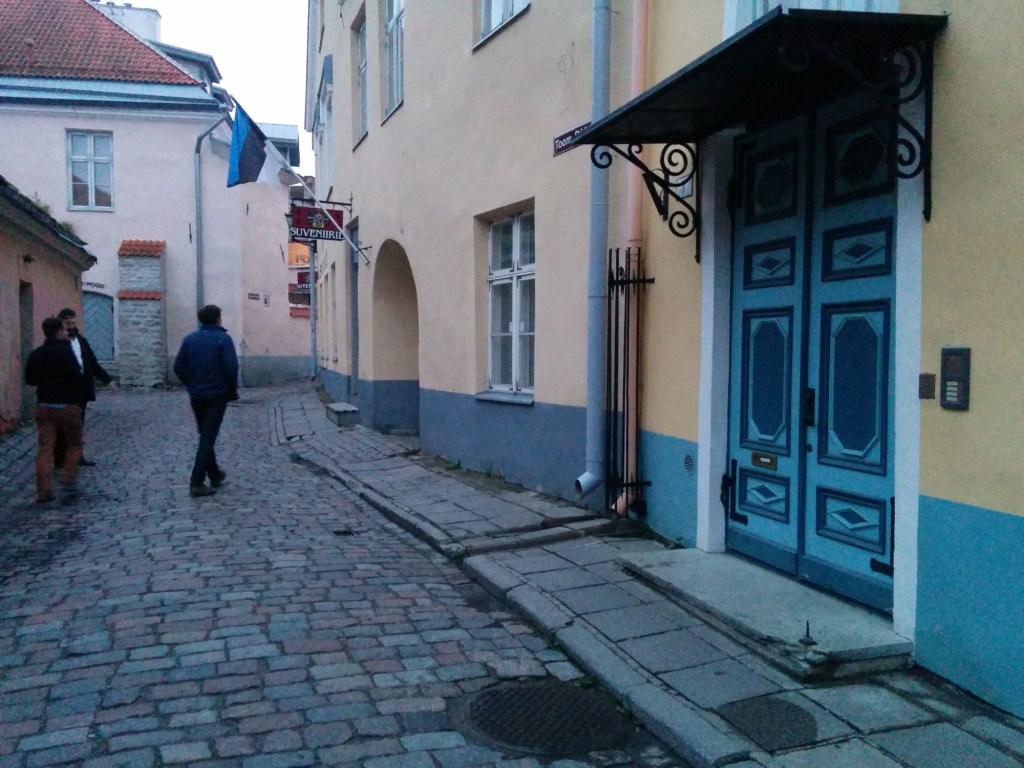
On the final day, before leaving, I had a chance to explore the streets of Tallinn a bit more. It’s a small city centre with a fascinating history involving Swedes, Germans, Russians and Dutch colonialism. Also lots of free wifi which doesn’t require frustrating registration forms, just a simple ‘I agree to T&Cs’ button to get going.

Of course one can never fully understand all the nuances in a short visit. But Brighton & Hove has now established some strong links with Tallinn and Estonia for our universities and councils to pursue. We are already looking at some joint EU bids between our councils. Meanwhile the campaign against e-voting continues.

I’d like to thank everyone who helped make my visit go so smoothly including Mr Edgar Savisaar, his assistants especially Oksana Jalakas, Priit Toobal MP, Kadri Simson MP, Taavi Aas, Allan Alaküla, Elena Sapp and many more.

View of Tallinn Old Town
Categories
notes from JK

Reject the Benefit Cap

Due to lack of time, we didn’t get to debate my motion on the Benefit Cap during January’s council meeting. It was passed in a quick vote, which was excellent news, though the Tory councillors didn’t support it.

I’d like to just put down some of the points I had hoped to make in the debate.

I had noticed in the last fortnight the government has announced tens of billions of spending on arms, submarines, jets and aircraft carriers.

Which really raised the question “What kind of society do we want to live in?”

The Tory vision where we have people going hungry and cold in our country, and shameful levels of child poverty.

Or a progressive vision where nobody is left behind, where those with greatest need receive the most help.

The government’s benefit cap policy is a cynical, populist move which will mostly hit large families, many with members struggling in low-paid work.

In Brighton & Hove we estimate, on the latest data, that 300 families will be so badly hit by this that they will most likely be made homeless. The Department for Work and Pensions confirm that councils will be responsible for housing these families at a cost of £1.1m a year to our city council. The coalition cabinet has agreed that new burdens on councils must be funded.

Yet we hear silence from government when we ask how this will be funded… there will be no saving to the public purse from this awful policy. Councils, already with squeeze budgets, will be left to pick up the pieces.

The result will be hurt, heartache and homelessness for struggling families.

I strongly oppose this cap and hope sense will be seen in time. Failing that it is unacceptable for yet another cost to be thrown on councils whilst government cynically claim they are saving money off the backs of the poorest through this policy.

In every sense – financial, policy and moral – this cap offers nothing good for our city.

Categories
notes from JK

A lasting contribution to our city’s future

January’s full council meeting was busy, as usual. But one item in particular stood out: Agreeing the City Plan, the twenty year vision for the city’s development. A once in a generation decision.

The plan, a huge collective piece of work by all parts of the council and partners, sets out the thinking for how all future development, whether offices, schools, homes or business space, will be planned and where.

Three years ago the previous Conservative administration had made an abortive attempt to pass a plan. It attracted hundreds of amendments from both Green and Labour councillors and was rejected by the government inspector before formal examination had even begun.

Now with a Green administration in place we took a fresh, far more inclusive approach. The plan had support from a very wide selection of environmental, business and other organisations in the city. As a result the new Green City Plan only saw very minor opposition amendments included, which did not change the fundamental policies we had proposed. What has now been submitted to the government inspectors is a robust strategy which balances the intense needs for housing and employment on limited land.

Critically the whole plan is built on the One Planet Living principles and enshrines high standards of sustainability. Meanwhile changes have been put in place to increase the amount of affordable housing that will be built, improved transport connections and allocations for new schools.

Every development proposals that comes forward from now until 2030 will be judged against this plan, ensuring that they will be built to Green ambitions. It’s a great, lasting Green contribution to our city’s future.