Categories
current affairs

Less alcohol than ever at Sainsbury’s, Western Road? I don’t think so

Half-price wine offer as you walk into Sainsbury's Western Road
Half-price wine offer as you walk into Sainsbury's Western Road - is this responsible?

A while ago I spoke on behalf of residents to a licensing panel considering an application from Sainsbury’s. The supermarket, a very short way from Waitrose, wanted to double its size and so needed to apply for a new license to sell alchohol.

Residents and I were concerned given that the area already has an abundance of places from which alcohol can be bought. Residents suffer from noise, anti-social behaviour, violence and more. It has got significantly worse since the new 2003 Licensing Act came into force.

However despite residents’ objections and my strenuous arguments that the license should be strictly curtailed if approved at all, it was granted. The Sainsbury’s lies right on the border of the ‘Cumulative Impact Area’ for licensing but that made no difference. Sainsbury’s barrister successfully prevented me from debating the low prices at which the supermarket sells alcohol. He also claimed that overall the new twice as big shop would have less space devoted to alcohol sales than previously.

Sadly the shop was boarded up and under expansion then so I couldn’t do ‘before and after’ shots. But I went in recently to take a look and there seemed to me to be a very significant space devoted to alcohol – see all the pictures on Flickr. The first shelf to greet you on entering the store was promoting half price bottles of wine.

In August this year, while I was on holiday, Sainsbury’s put in to extend the hours of alcohol sales to almost 24 hours. Unfortunately nobody objected to this other than the Council’s Trading Standards*. This is not surprising because beyond a small piece of paper in the window, there is NO requirement to notify people living near premises applying for a license or wishing to vary an existing one. Trading Standards’ concern related to underage drinking, but once a “Challenge 21” scheme was agreed to by Sainsbury’s (a fairly standard condition) the objection was withdrawn and the licensing panel meeting was cancelled.

However the online licensing register still shows the extended license as not having been granted because checks are outstanding. I’m trying to find out what that means but it seems likely that very soon we are going to have a virtually 24hr off-license selling at supermarket prices. The licensing law is completely failing residents and this city – we seem unable to stop the spread of cheap booze nor the harm it is causing people directly or indirectly. When will our MPs step up to push the change my constituents are crying out for?

Find out more:
Sadly I can’t link directly to licenses, but at least there is now a web-based register. Enter the reference codes below into the search at http://www.brighton-hove.gov.uk/index.cfm?request=c1204374

Application to open bigger store: 1445/3/2009/00059/LAPREN (minutes of that panel)
Application to extend hours: 1445/3/2009/01692/LAPREV (papers for cancelled panel)

* As a councillor I can only object to an application if either I personally live or have a business close to the premises in question, or a constituent close by asks me to speak on their behalf. Otherwise I am unable to participate or speak to a licensing panel meeting. This is extremely frustrating.

UPDATE: I have now received confirmation from council officers that the license indeed has been granted to allow sale of alcohol from 6am until midnight and late night refreshment (i.e. hot food) from 23 until midnight. I also clarified the text above to make it clear it won’t be open a full 24hrs a day as the license currently stands. (13/11/09)

Categories
notes from JK

Naked shoes – Going barefoot style

Women running on the beach

I don’t recall how, but a while ago I somehow ended up reading a post by Tim “Four Hour Work Week” Ferriss on barefoot alternatives. The post and its comments fascinated me. In discussing his experiences of barely there shoes, the post opened me up to a new world of discussion about what shoes might be doing to our feet.

I had been aware for some time of long distance runners going barefoot, particularly those from Africa. But I hadn’t given it much thought as I don’t see myself as much of a runner. But when you consider how marvellous our feet are, it does seem strange that we shore them up with a vast array of padding and strapping in modern shoes. As I read more on the topic it appeared that there was in fact very little science behind many of the technological claims made by shoe manufacturers.

It just seems intuitively and scientifically reasonable that we should let our highly complex and flexible feet to work as freely as possible to spread and balance the pressures of our movements. That current shoe designs are rarely questioned is indicative of the tendency for ‘common knowledge’ to stagnate for too long. Historians of science will be able to point many similar examples with regards to hygiene, blood letting and so on.

We have been paying top dollar for shoes which could well be doing more harm than good, and very few have questioned that. How carefully are the claims of shoe manufacturers verified versus those claims made by pharmaceuticals or even ‘active’ yoghurt products? Back pain costs us huge amounts each year in distress, treatment and time off work. Can shoe manufacturers be trusted on this issue?

My reading took me to New York Magazine’s marvellous article on the barefoot vs shoe debate. The Daily Mail had a surprisingly good piece on the risks of hi-tech shoes. After digesting all these and visiting specialist sites like barefootrunner.com I came to the conclusion that I wanted to try out some ‘barefoot-style’ shoes.

barefeet_in_grass_small

I found there were three likely candidates – the odd-looking Vibram FiveFingers; the Nike Free range and Terra Plana’s VivoBarefoot shoes. The Vibram’s were too wacky for my liking and, according to online reviews, the Nike’s would be too small for my boat-like feet. Terra Plana, luck would have it, have just opened a shop on West Street in Brighton so I popped in to try their Aqua shoes and… wow!

So comfortable, so close to the ground, so… very light! I hadn’t expected them to be so light, suddenly I realised I’ve been lugging extra weight on my feet every day of the week.

I didn’t hesitate to buy them given Terra Plana’s excellent ethical and environmental credentials (but not perfect yet I hasten to add). Walking in the Aquas is a very different experience, much more sensory and stimulating as you feel everything beneath your feet. The thin, extremely flexible sole is just enough to protect but doesn’t feel restrictive at all.

After two weeks of near constant use — but for walking only, nothing more active as yet — I am absolutely evangelical about these very well made shoes. My feet feel like they are stretching outwards and getting stronger. It’s definitely noticeable that over time I’m clomping heel-first less and less.

If we’ve been doing the wrong thing with shoes all this time, what else do we need to seriously re-evaluate? Perhaps our working patterns? Our financial and banking systems? Or perhaps how we elect our politicians? All up for debate, but this shoe story emphasises to me the importance of staying open minded and critically evaluating the terms of any received wisdom.

Categories
notes from JK

Dealing with green waste: Brighton & Hove vs the world

bulldozer_in_landfillI’m asking you to support a council-run green waste collection in Brighton & Hove with a pledge.

As some have noticed from my blogs and press work, I’m passionate about waste and recycling. I want to see Brighton & Hove at the forefront of best practice, aiming for zero waste. Unfortunately at the moment this is not the case, the city’s draft waste strategy has us planning to come in under the national targets for recycling and composting.

The first small step in trying to turn that around is arguing for a green waste collection in our city. This is something many people have called for, including the Older People’s Council, who rightly argue that many don’t have space to home compost, don’t have a car to drive waste to a collection point and can’t afford private pick-ups on a regular basis.

Based on what other councils provide, I expect we can provide a collection for a fee of around £50 a year. This would mean only those needing the service pay, it wouldn’t be supported by council tax, thus ensuring those without gardens aren’t paying for a service they can’t use.

To help convince the powers that be that this can be done I’m calling on everyone who’d like to use this service to pledge that they will sign up if we get the collections launched. Please signup at pledgebank.com/greenwaste and spread the word. Pledgebank wouldn’t let me specify the full area covered by the city, but if you live in Portslade, Hove, Brighton, Kemptown or Rottingdean then you can sign up.

To provide some context on what’s happening elsewhere and add to the pressure on the Council administration, here are some links:

Categories
notes from JK

Open Primaries: Right diagnosis, wrong solution

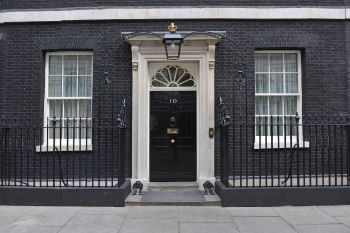
10 Downing Street

I was very interested to see the launch of the ‘Open Up’ campaign, with a very slick website and duck-house videos. I would expect nothing less given the people behind it including the immensely capable Becky Hogge, ORG’s former Executive Director.

There is as a whole swathe of campaigning going on at the moment calling for reform in one sense or another. This is extremely encouraging and welcome, it’s wonderful that people are speaking out and getting involved. More power to them.

However, I must take issue with Open Up’s proposed solution. I absolutely agree with their core argument that we need better and more diverse politicians. I think the poor quality of British politics and politicians is an absolutely critical issue at the moment.

In my view party political representative democracy is still the least worst option available to us. If we didn’t have parties we’d have to invent them. All lasting democracies develop groupings of some form another. But we urgently need to re-invigorate parties and our democratic institutions.

Interestingly the Speaker’s Conference in Parliament has recently been touching on these issues too. I took the opportunity to watch online the three party leaders speaking to the Conference: Cameron sounds more dynamic next to Brown but didn’t really say anything more significant. I felt Clegg was the most honest in admitting many of the people they need weren’t coming forward. He also argued that Westminster itself wasn’t the right kind of place to attract the people we need in politics.

We need better politicians

So if we accept that to improve our politics we need better politicians; then it follows that we need a more diverse set of candidates from a wider set of backgrounds. How are open primaries going to do that?

The argument is that because anyone can stand to be a candidate in an open primary, the barriers to ‘real people’ becoming candidates are lowered. People who aren’t party animals, more likely to be ‘mavericks’, will be more likely to stand. This is possibly the case but standing for an open primary then an actual general election doesn’t strike me as a low barrier, many will be put off by that. Furthermore there is no discussion of how to prevent the rich getting a head-start in winning an open primary.

This is one of several practical problems I see with open primaries. Another is that most parties cannot possibly afford to run open primaries where every elector in a constituency can vote for their candidate. The three largest parties are all in debt and the addition of this kind of process in every constituency would be beyond them let alone the smaller parties.

It would also be expensive for potential candidates, particularly if the primaries were truly ‘open’ allowing leafleting and canvassing across the constituency. Such primaries would further extend the length of time a potential candidate would need to dedicate to winning a Westminster seat. If a General Election goes to the wire (as this one looks to) then it can already be a two or three year unpaid commitment before we throw in a whole open primary process.

Finally there is a real risk of voter burnout once the novelty of open primaries has worn out. In a seat like Brighton Pavilion you could be looking at four or five primaries minimum then the General Election itself. There is evidence, particularly from the United States where some citizens vote on dozens posts and initiatives annually, that the more things people are asked to vote on, the less likely they are to vote. There can be too much of a good thing.

These are serious practical problems with open primaries which proponents don’t properly address, I’m not sure they can. There are also political problems with open primaries which mean they won’t deliver what proponents hope for.

Political problems

I believe open primaries will greatly increase the chance of politically naive candidates being selected. I don’t just mean innocent about the ways of politics (though that could be an issue that impacts on their effectiveness as MPs), but that candidates could genuinely not understand or know the range of a party’s policies before being selected.

Imagine a popular local figure gets selected for a party in an open primary then wins the General Election to become an MP by campaigning on, for example, health and policing. This MP is asked by their party whips to vote on a variety of issues in ways they don’t support such as education or civil partnerships. What do they do? Most parties use peer pressure and whips to enforce party discipline and ensure that policies are pushed through (if they are in government). If you vote for a candidate from a certain party shouldn’t you expect them to generally be in line with that party’s core values and policies? How will open primaries, when people of all and no party affiliation have a hand in selecting a party’s candidate ensure some compatibility with a party’s values?

We don’t want to see only the most loyal, grovelling party animals selected as candidates. Absolutely not. But we also don’t want people to become disenchanted because they voted for a certain party only to find the candidate isn’t really in line with what the party represents. Rebels have an important place in Parliament at critical times, but systematic rebellion (pre-planned or unintentional through naivety) is a recipe for chaos, not reasoned legislative work.

Open primaries also don’t alter the electoral reality of safe seats. Unless extremely ineffective or corrupt, most sitting MPs will have an inherent advantage in any selection whether it’s an open primary or internal party process. That’s just how it is, they have the profile and the contacts. Open primaries don’t neutralise incumbency, and we see in the US that it’s still reported as unusual for a sitting politician to lose their party’s selection through a primary if seeking re-election.

We need reform and a new political culture

We need a new culture of politics, one that is more open, honest and transparent. I admire the energy and passion of the Open Up campaign, but disagree with their prescribed solution. Open primaries will be prohibitively expensive for parties and candidates, will burn out voters, could result in candidates not truly representing the party label they stand for whilst failing to address the problem of safe seats.

Changing the culture in our politics requires a more open media, a redesigned educational system, a new constitution, reform of political funding, a recall process and most importantly — a system of proportional representation to elect members to both houses of Parliament. Call for open primaries distracts from these key requirements in the reform agenda.

I believe party politics has a great future ahead of it, if we can increase the number and quality of parties. We need smaller parties that can be more representative of specific groups in our society, more flexible, responsive and less hamstrung by the internal coalitions and simmering disagreement that the large parties of today represent.

This would force greater collaboration, more discourse as opposed to bombastic posturing and a richer, better politics for our country. What do you think?


Categories
notes from JK

Climate Change: It’s happening…

Share photos on twitter with Twitpic

Today is Blog Action Day 2009 and the theme is Climate Change. An easy one for me to support!

If you’re still in doubt then take a look at Google Earth’s climate change page (with intro narrated by the one and only Al Gore). Zac Goldsmith made an excellent point on Newsnight last night… that people are desperate for political leadership on this issue. I agree, but don’t think Cameron is the man to do it! Greenpeace made a similar point with their marvellous “Change the Politics, Save the Climate” action on Parliament.

Ways to take action:

Categories
current affairs

Wrong-headed Tory CEO-Mayor policy

I was astounded and appalled by Monday’s announcement from the Conservatives that they planned to merge council chief executives with directly elected Mayors.
The Guardian:
Twelve cities across the country would hold referendums to get rid of their council chief executives and hand over the powers to an “executive mayor”, who would take over the role of hiring and firing staff, determining council operations, and directing spending, as well as offering political leadership.
Conflating the two posts would help address public concern about the pay of local authority bosses, said Caroline Spelman, the shadow communities secretary.
Firstly, I agree that many chief executives (in local authorities and private companies) are vastly overpaid compared to their hard working staff. But cutting up to 12 CEO salaries and replacing them with new elections for mayors is hardly going to be saving money. It’s a populist measure because most people won’t think of the cost of the elections when hearing the proposal — they’ll just keep in mind losing another expensive bureaucrat.
But what worries much more is that this announcement shows that the Conservatives are ready to abuse the position of the civil service as much as Labour have. Peter Oborne and others have been scathing of how a trend to politicise and misuse the civil service in the political trenches has gone from occasional in the Thatcher years to out of control in the Blair years.
No matter who is in charge politically, a paid head of the civil service is needed to manage the permanent staff of government who remain whatever changes elections bring. YES local government desperately needs serious reform… but going back on hundreds of years of political evolution by merging officer and politician is wrong-headed, fixes nothing and is just cheap populism.
This is a bad policy and I’m disappointed that a major political party could actually announce something so wrongheaded. It doesn’t bode well for the level of political debate ahead…

I was astounded and appalled by Monday’s announcement from the Conservatives that they planned to merge council chief executives with directly elected Mayors.

The Guardian:

Twelve cities across the country would hold referendums to get rid of their council chief executives and hand over the powers to an “executive mayor”, who would take over the role of hiring and firing staff, determining council operations, and directing spending, as well as offering political leadership.

Conflating the two posts would help address public concern about the pay of local authority bosses, said Caroline Spelman, the shadow communities secretary.

(Also see reports in LGCPlus and Planning Resource)

Firstly, I agree that many chief executives (in local authorities and private companies) are vastly overpaid compared to their hard working staff. But cutting up to 12 CEO salaries and replacing them with new elections for mayors is hardly going to be saving money. It’s a populist measure because most people won’t think of the cost of the elections when hearing the proposal — they’ll just keep in mind losing another expensive bureaucrat.

But what worries much more is that this announcement shows that the Conservatives are ready to abuse the position of the civil service as much as Labour have. Peter Oborne and others have been scathing of how a trend to politicise and misuse the civil service in the political trenches has gone from occasional in the Thatcher years to out of control in the Blair years.

No matter who is in charge politically, a paid head of the civil service is needed to manage the permanent staff of government who remain whatever changes elections bring. YES local government desperately needs serious reform… but going back on hundreds of years of political evolution by merging officer and politician is wrong-headed, fixes nothing and is just cheap populism.

This is a bad policy and I’m disappointed that a major political party could actually announce something so wrongheaded. It doesn’t bode well for the level of political debate ahead…